Gallery of best work
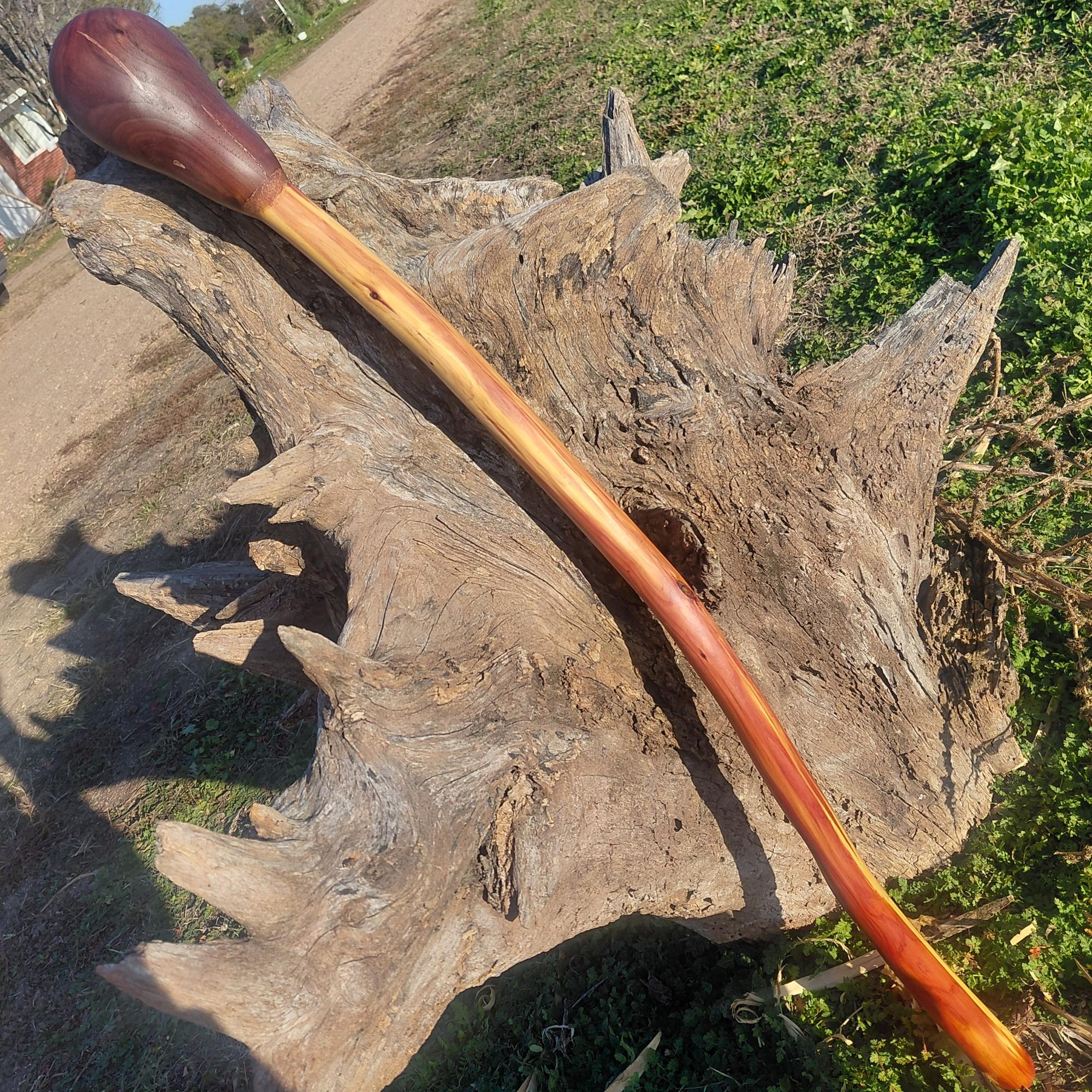
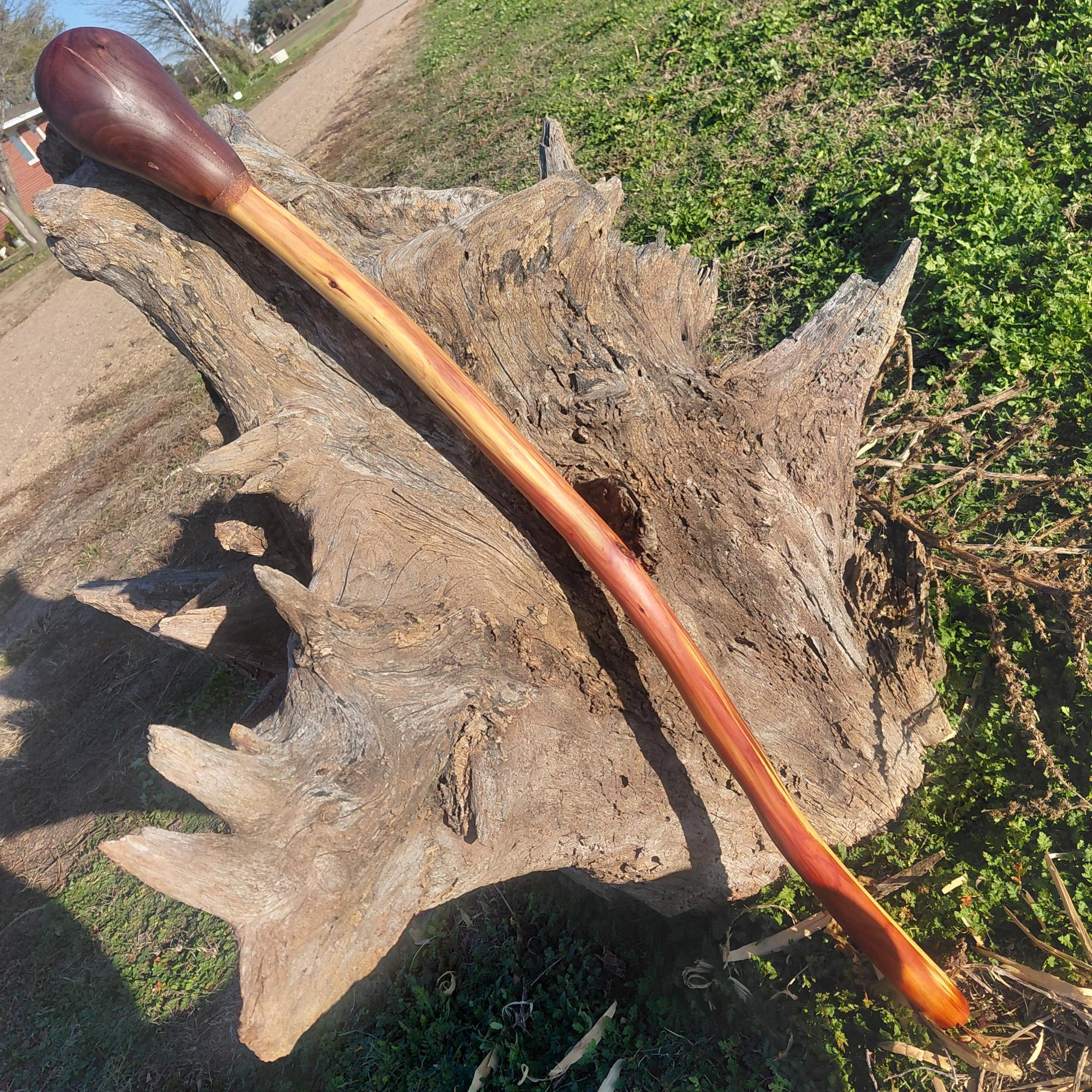
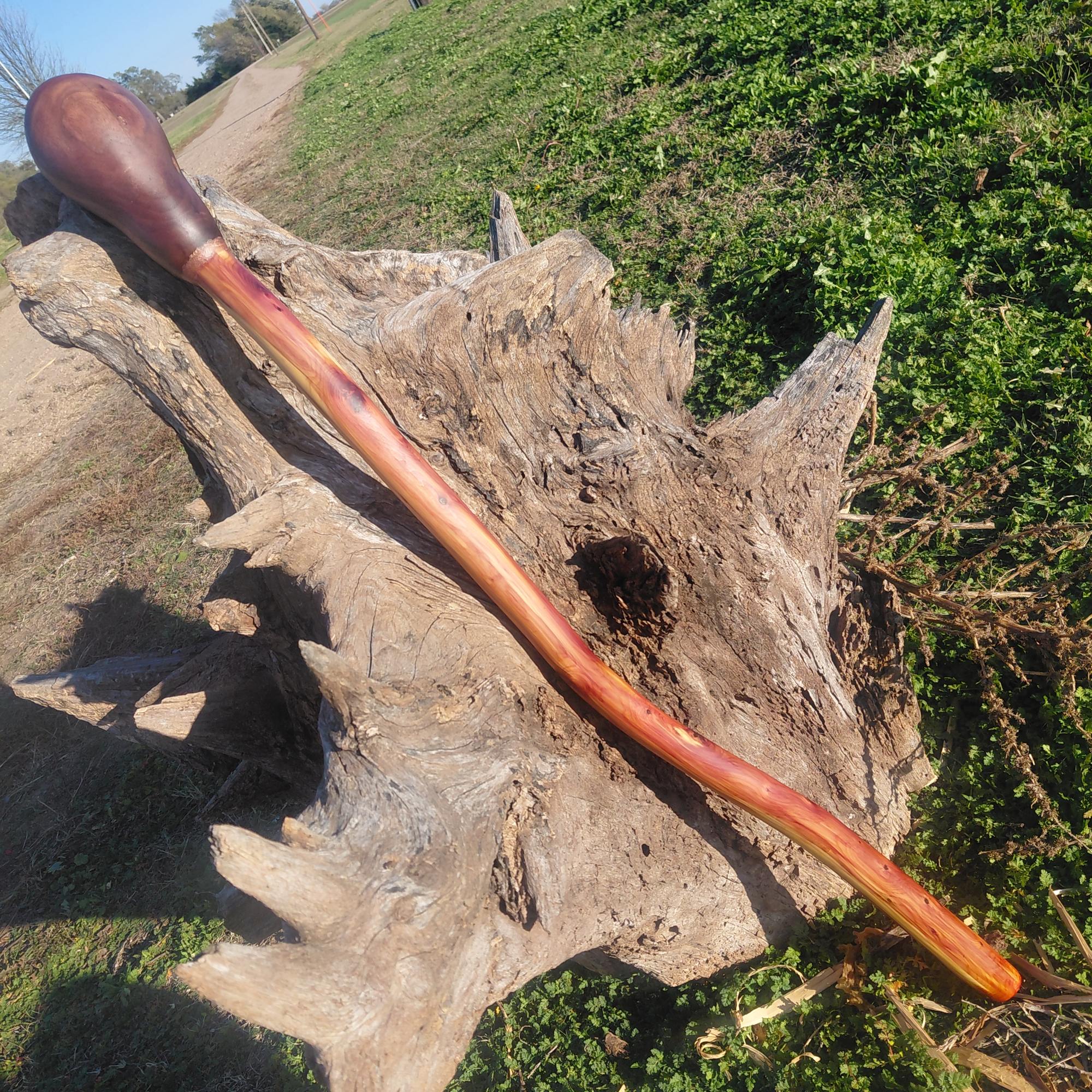
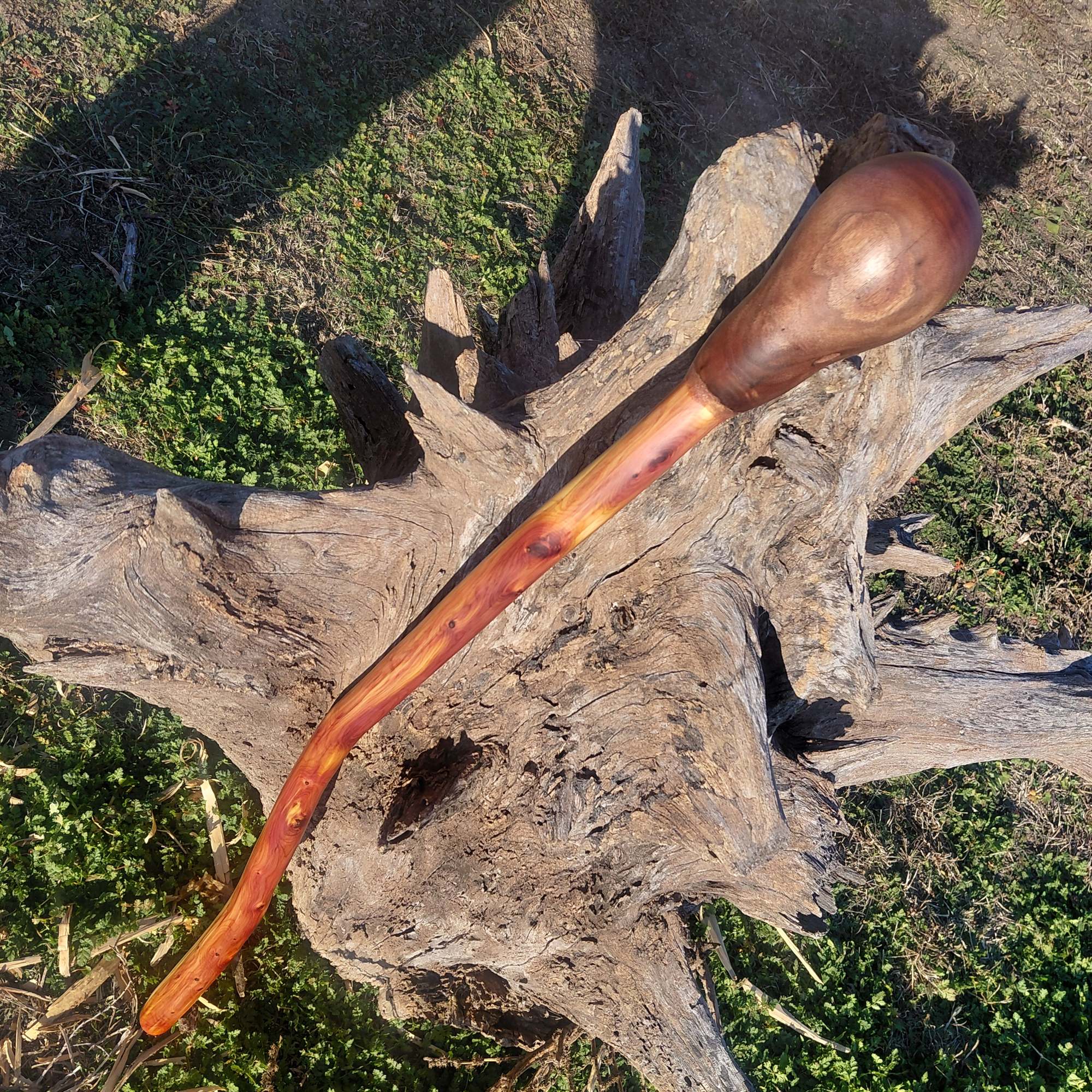
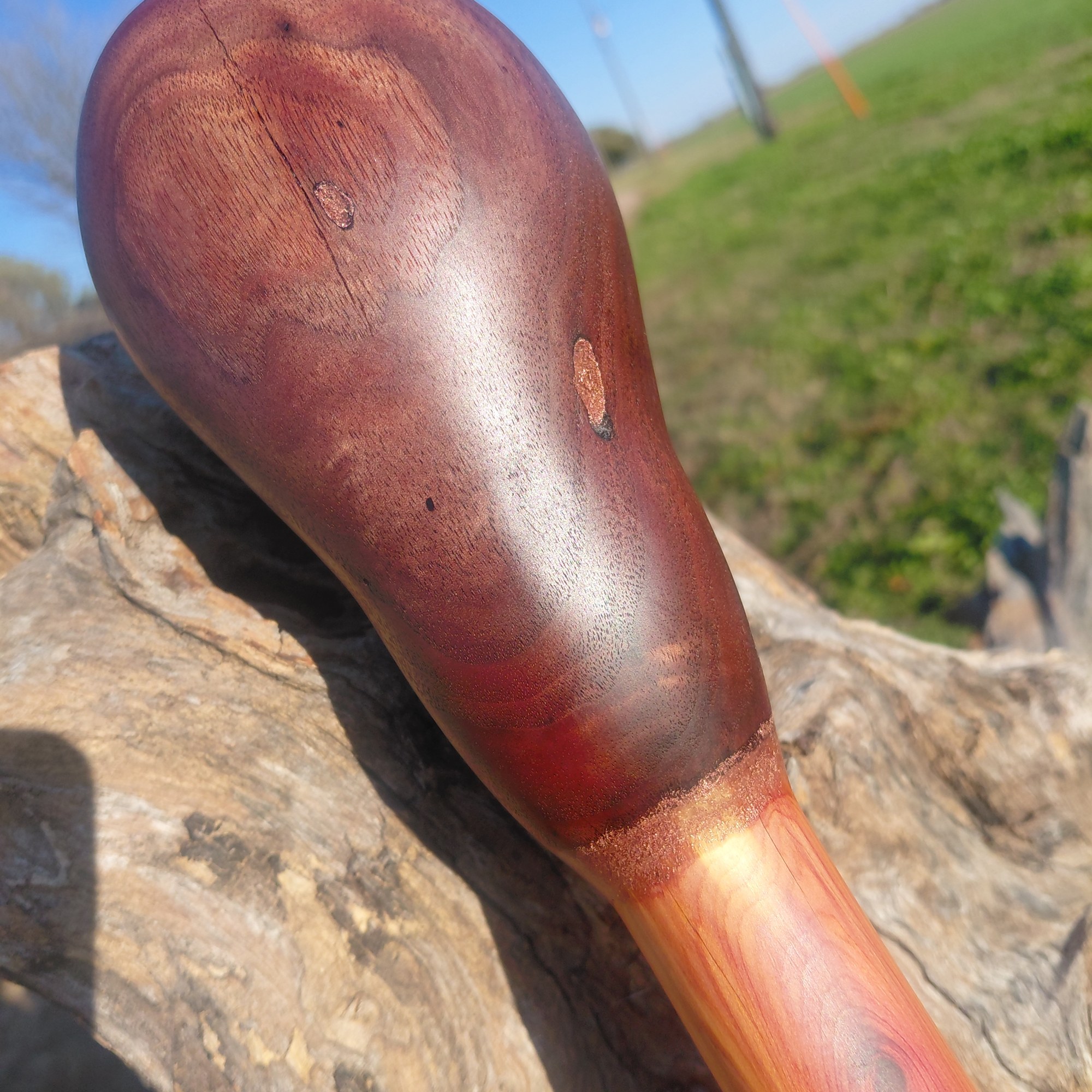
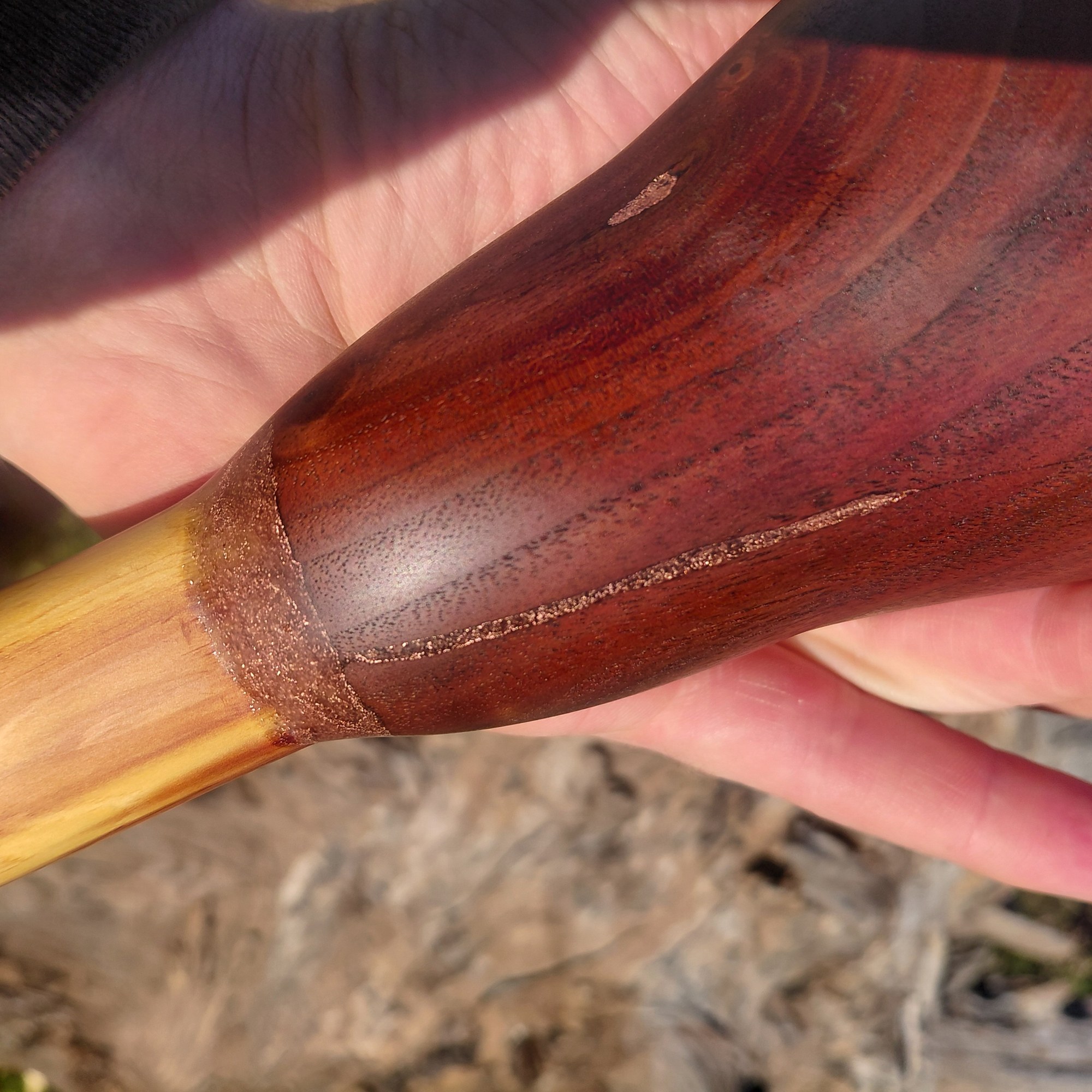
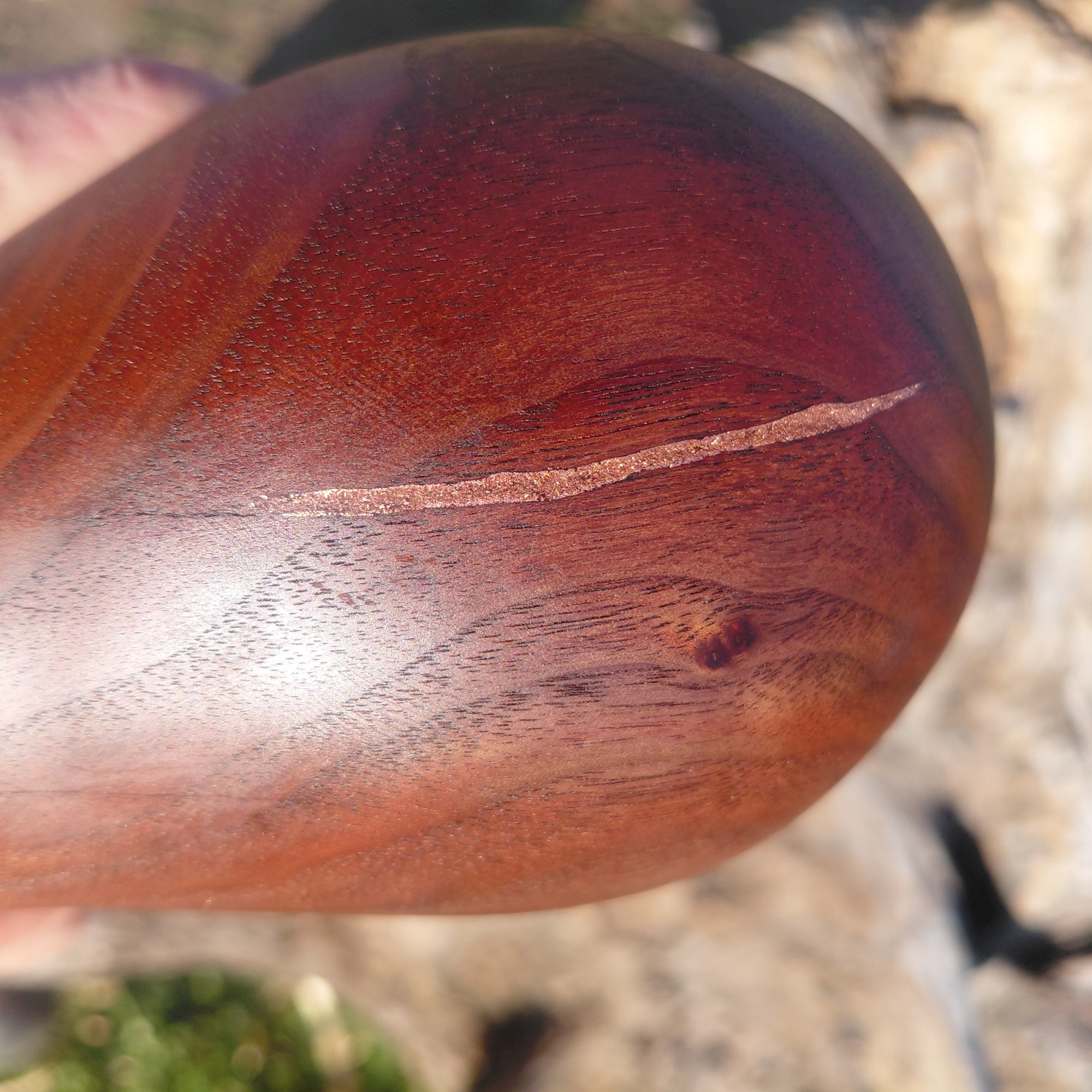
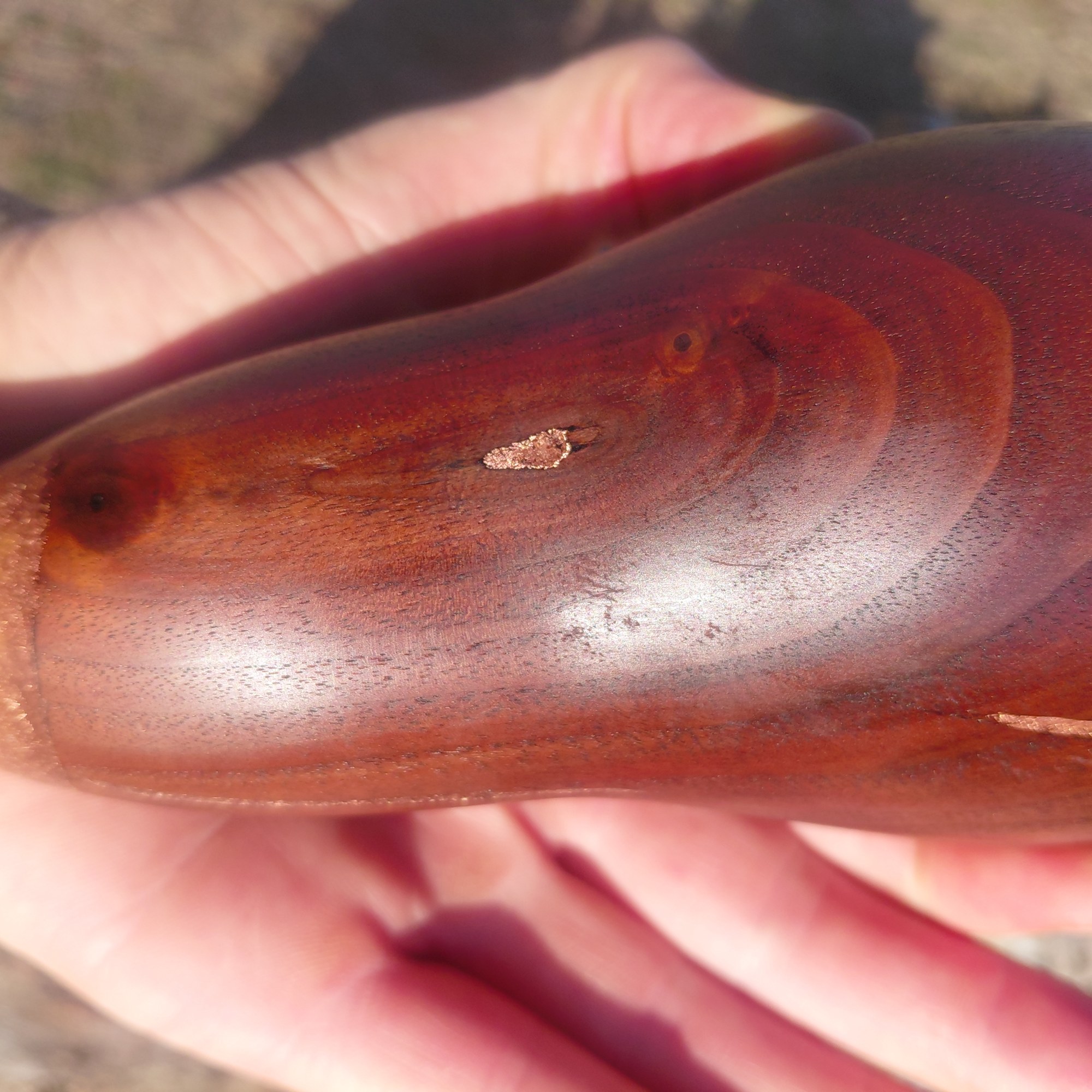
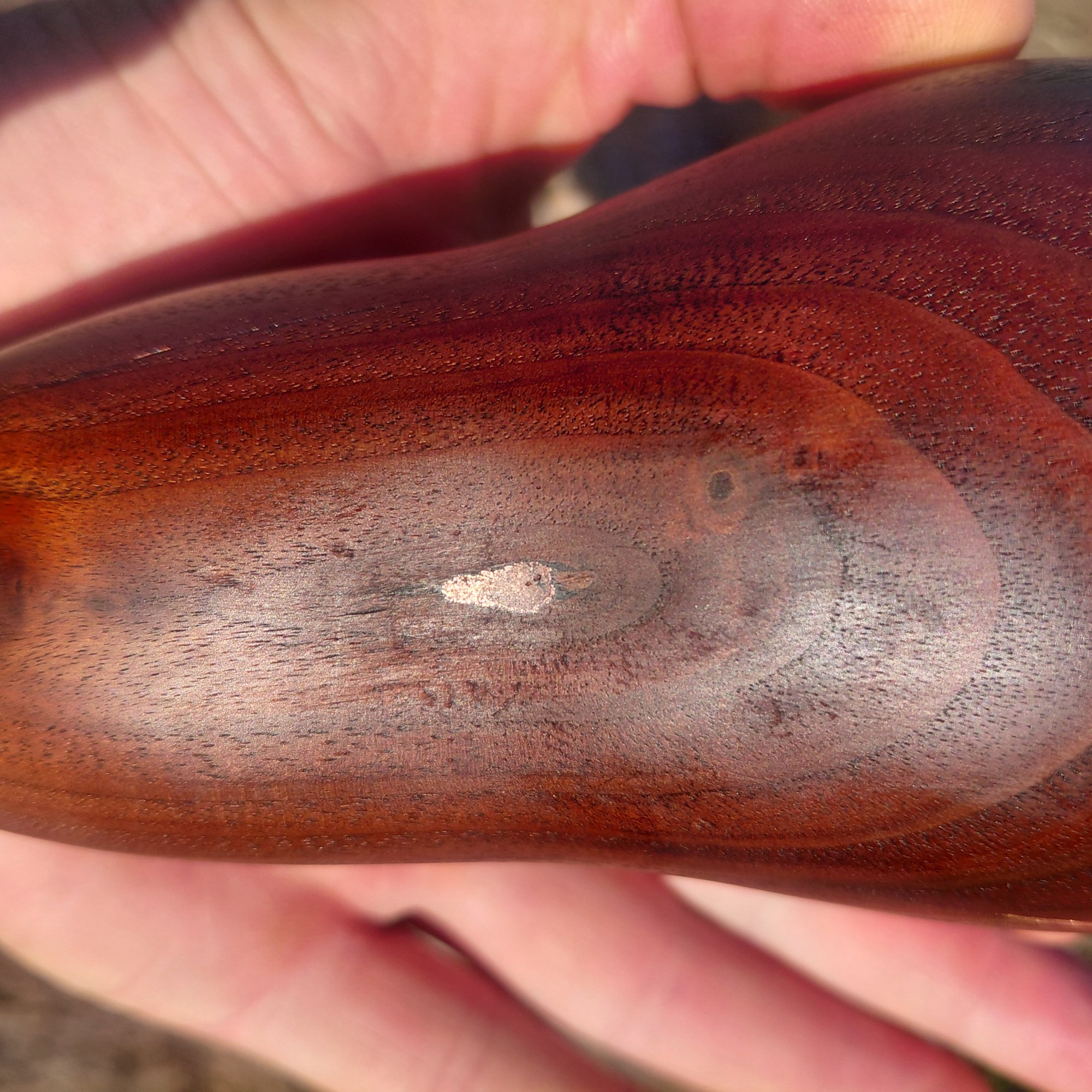
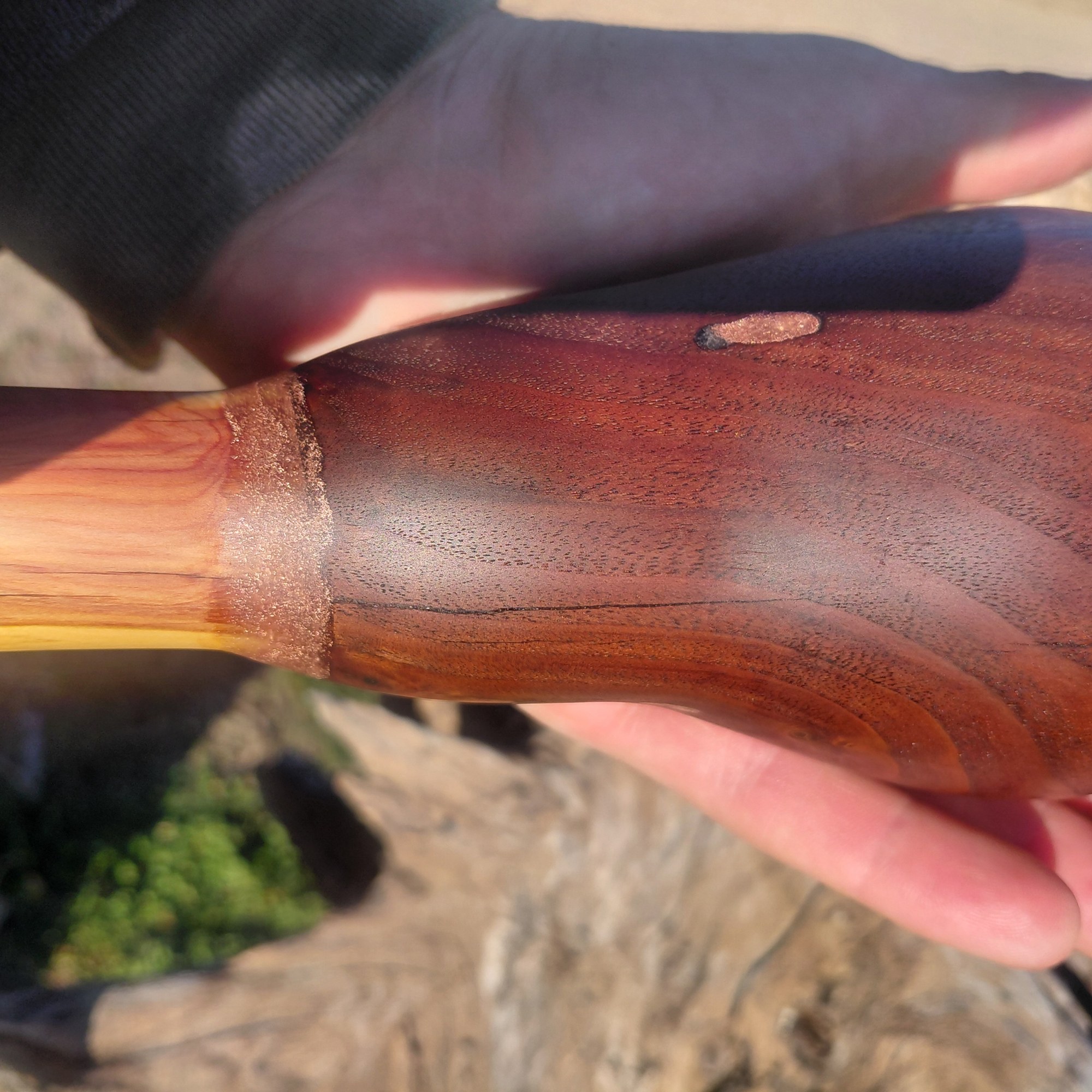
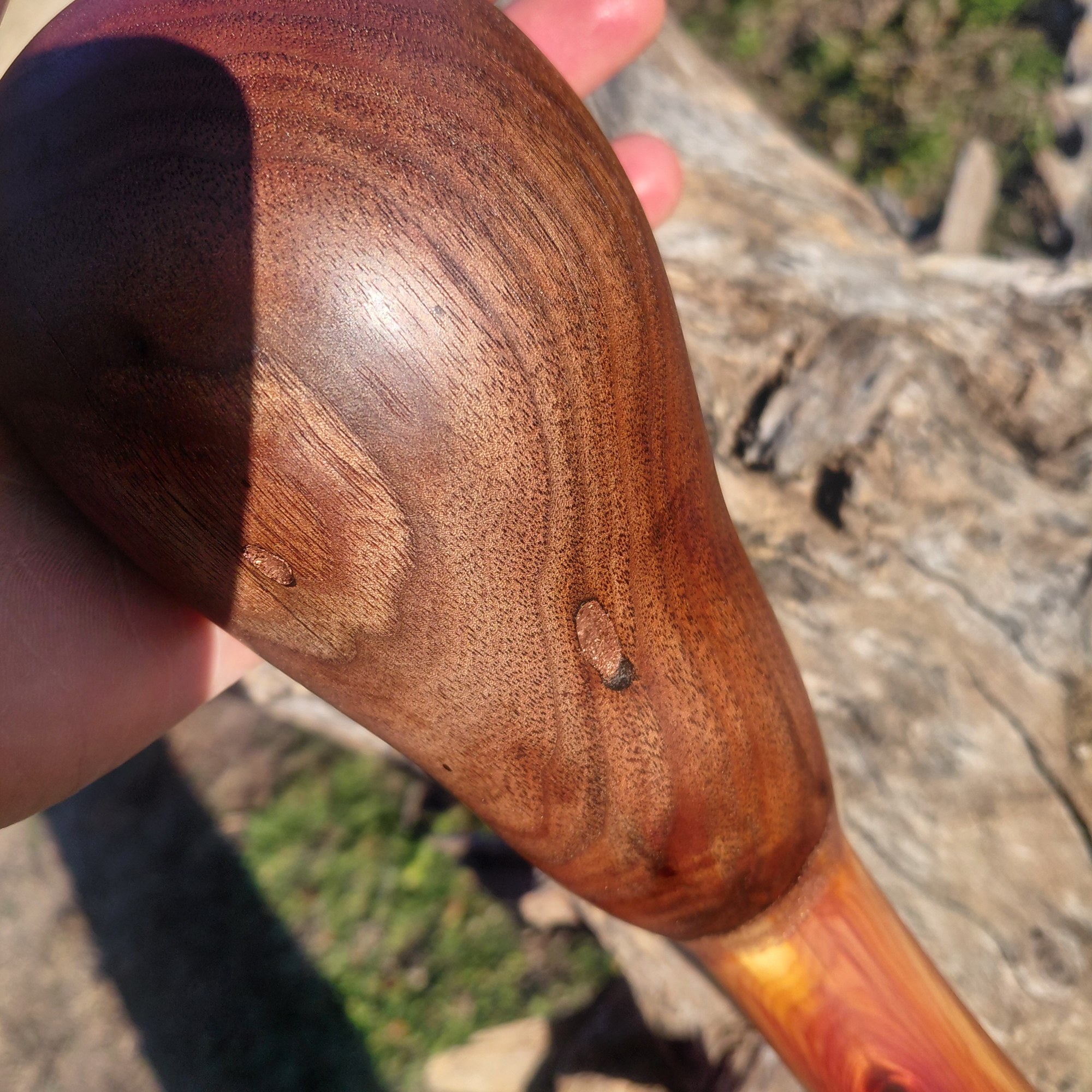
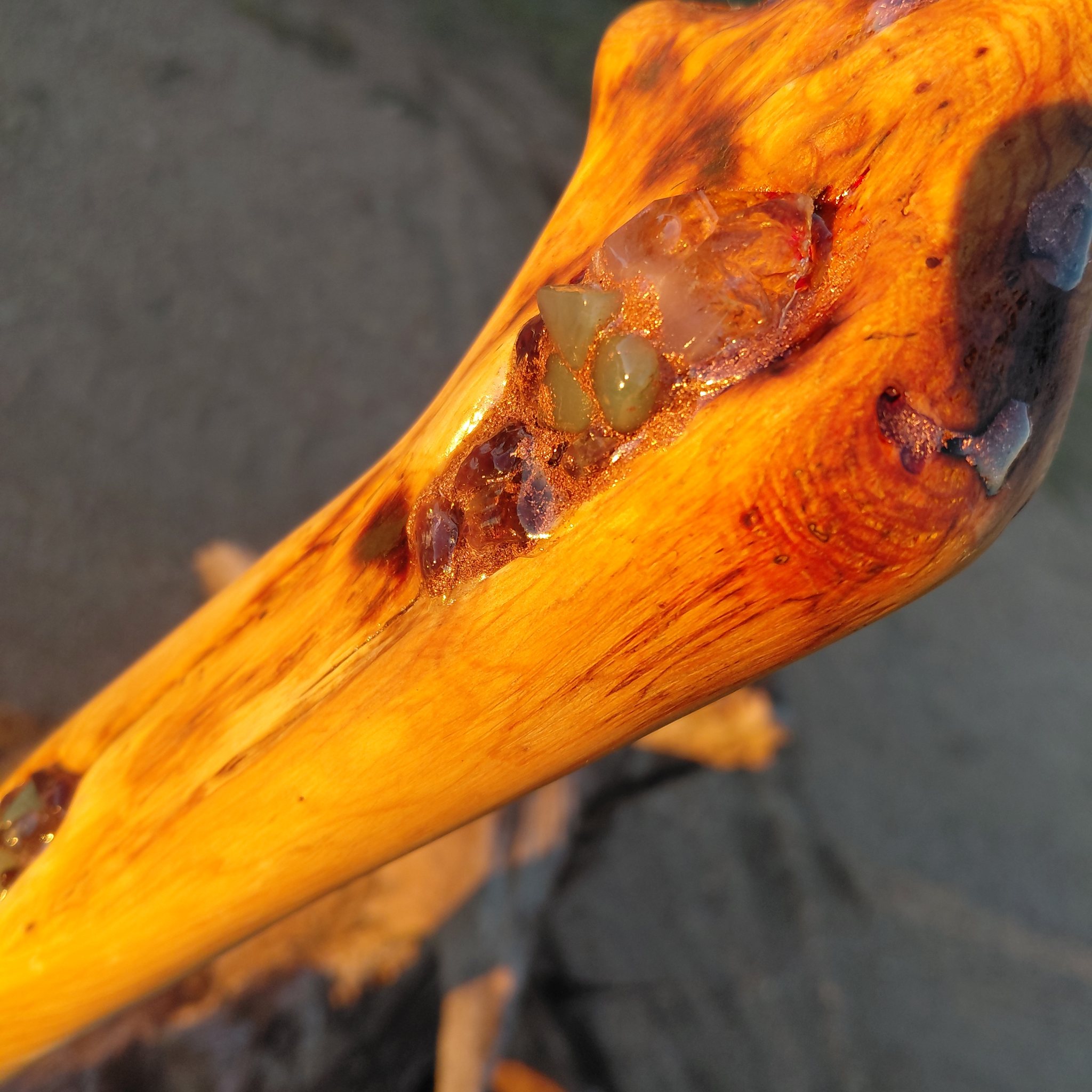
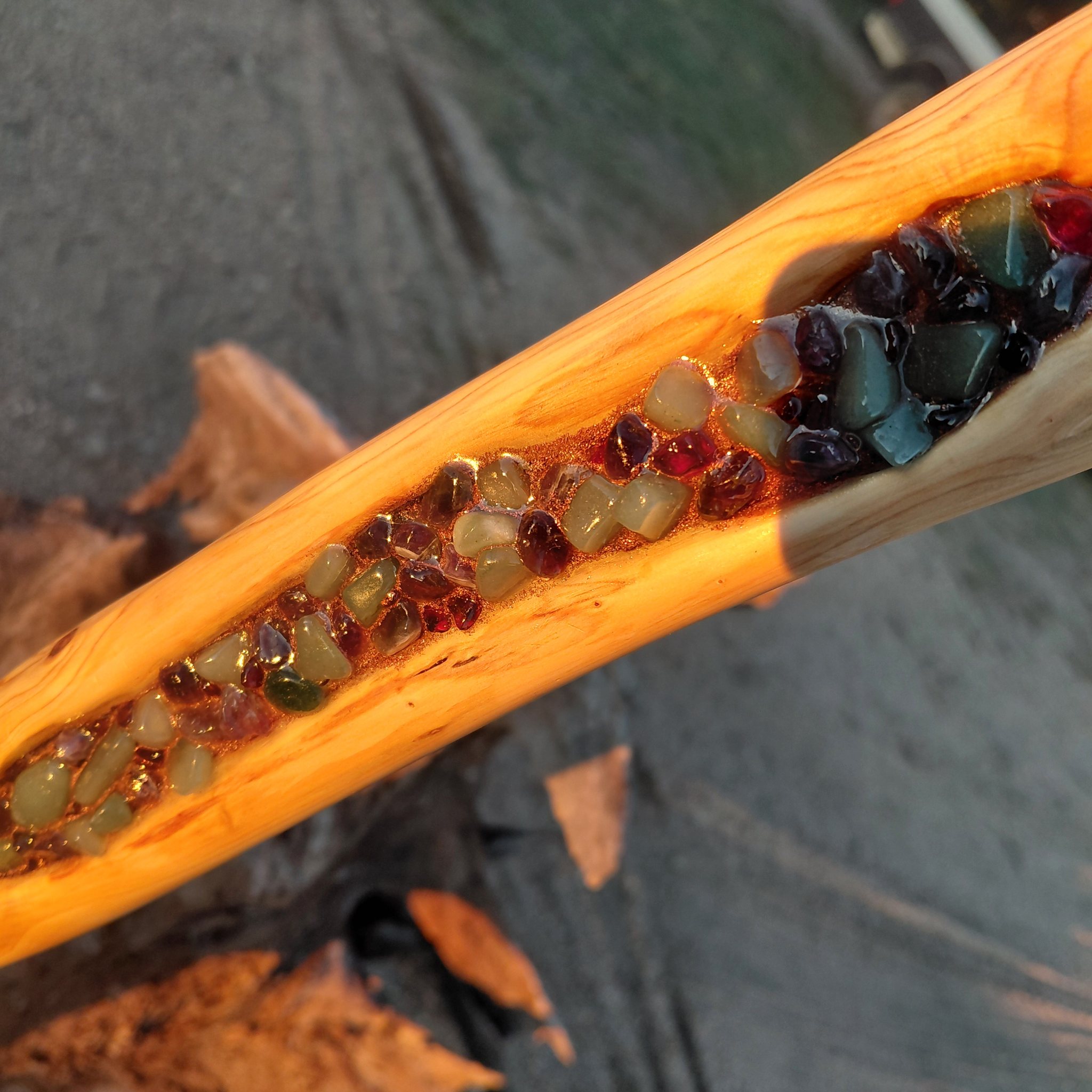
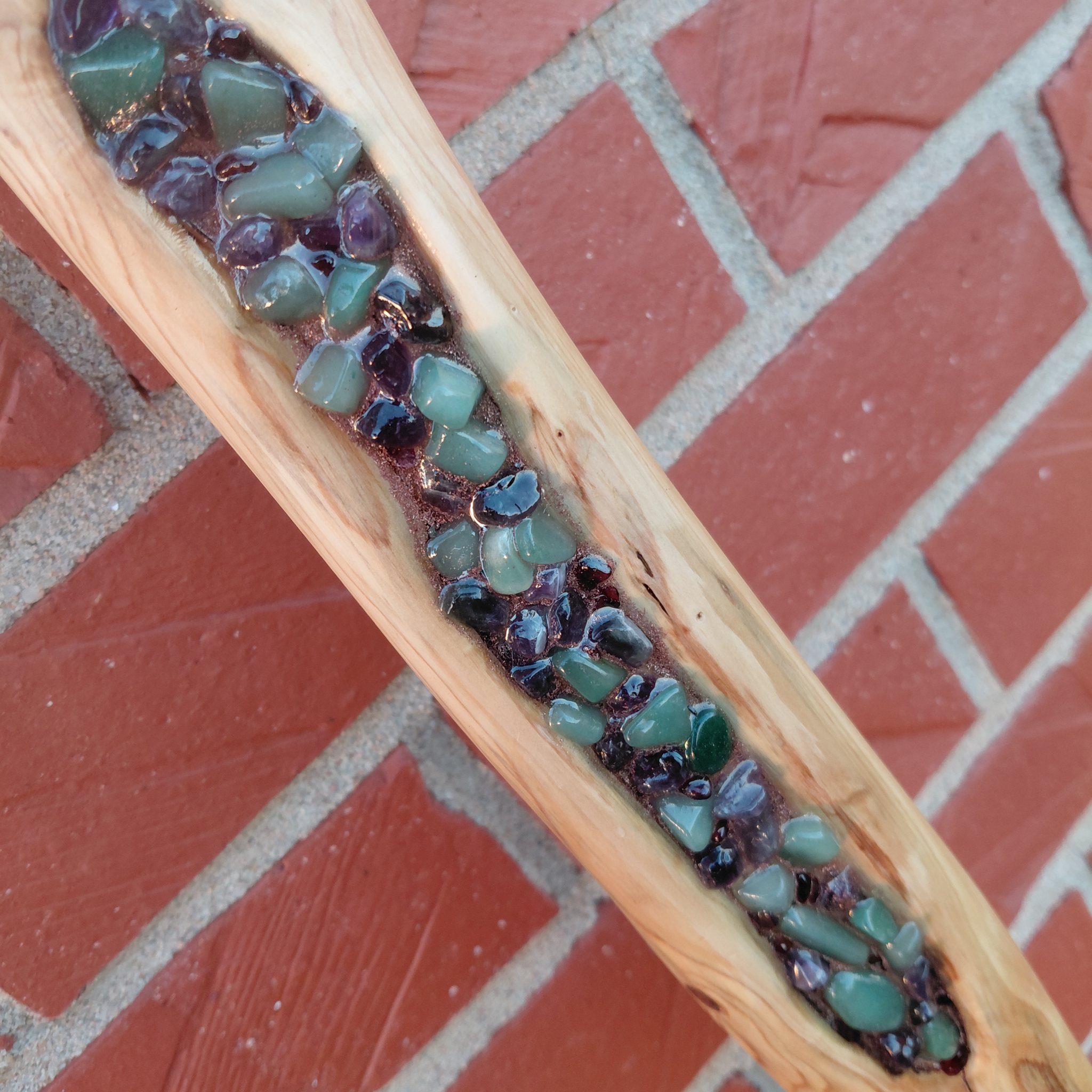
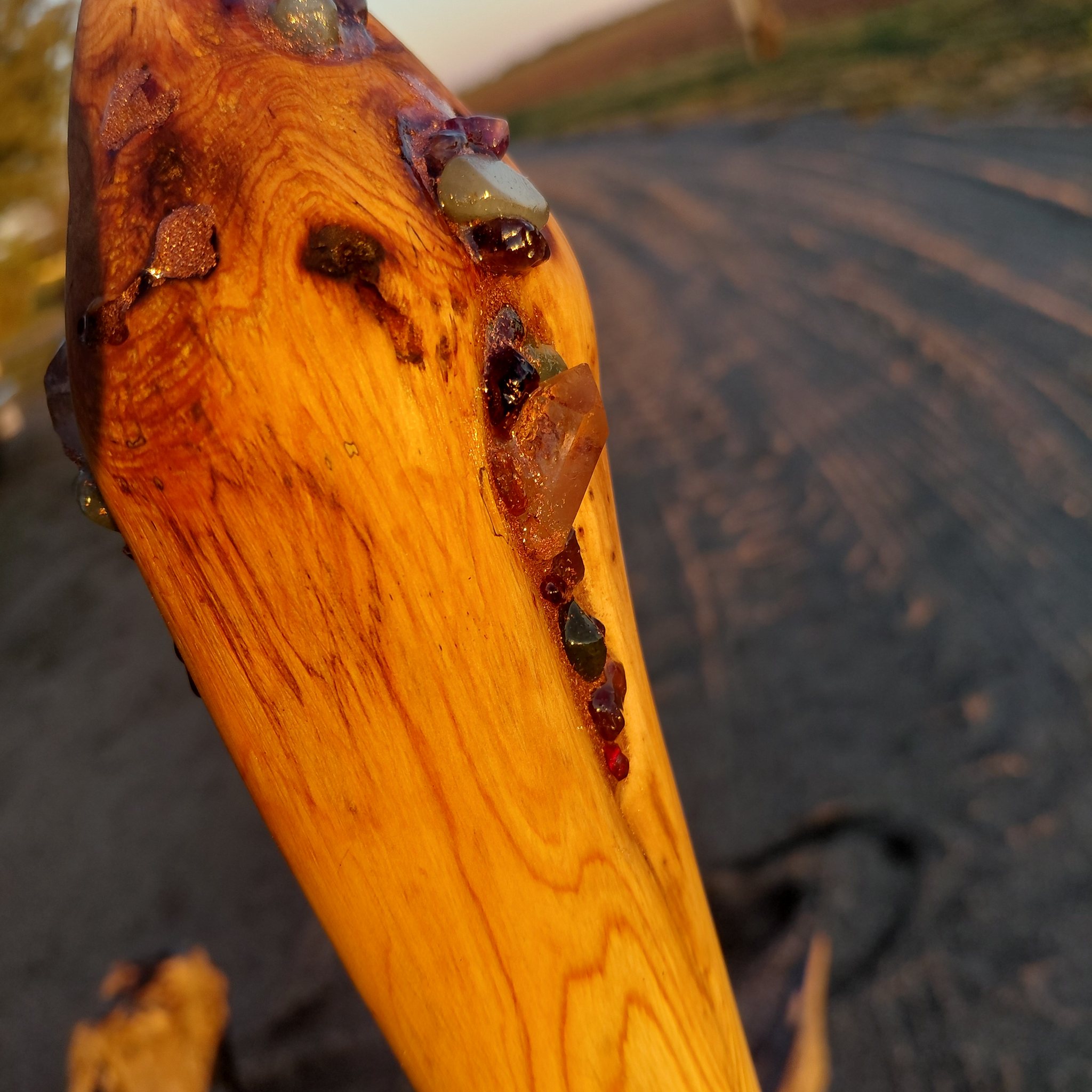
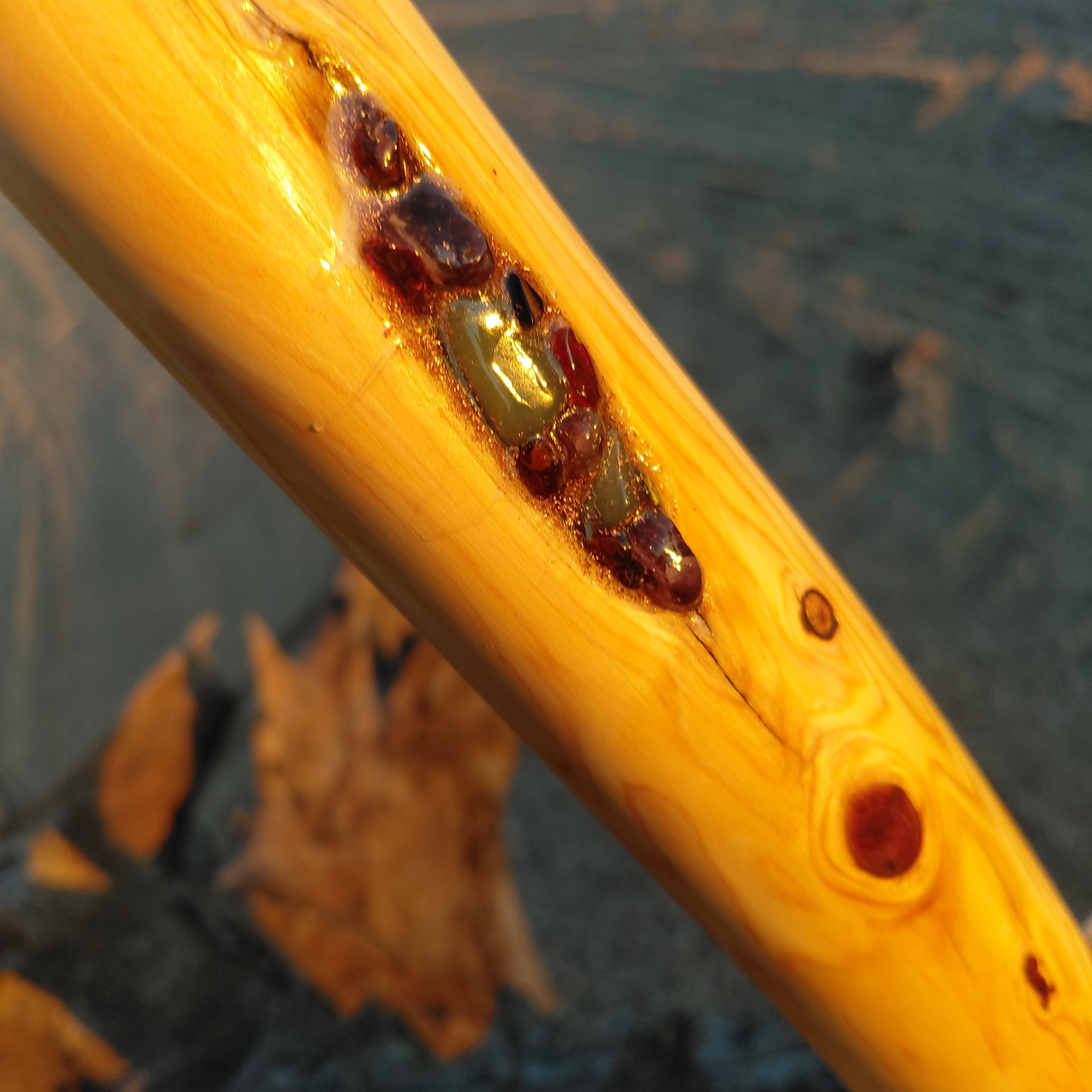
Black walnut knob, eastern red cedar shaft, and resin epoxy in the cracks, in the spot where the shaft meets the knob, and in any insect galleries and where branches came out of the knob.
The knob has awesome grain patterns. The shaft also does. But the highlight is the copper shavings making orgonite in the resin epoxy that covers the knob.
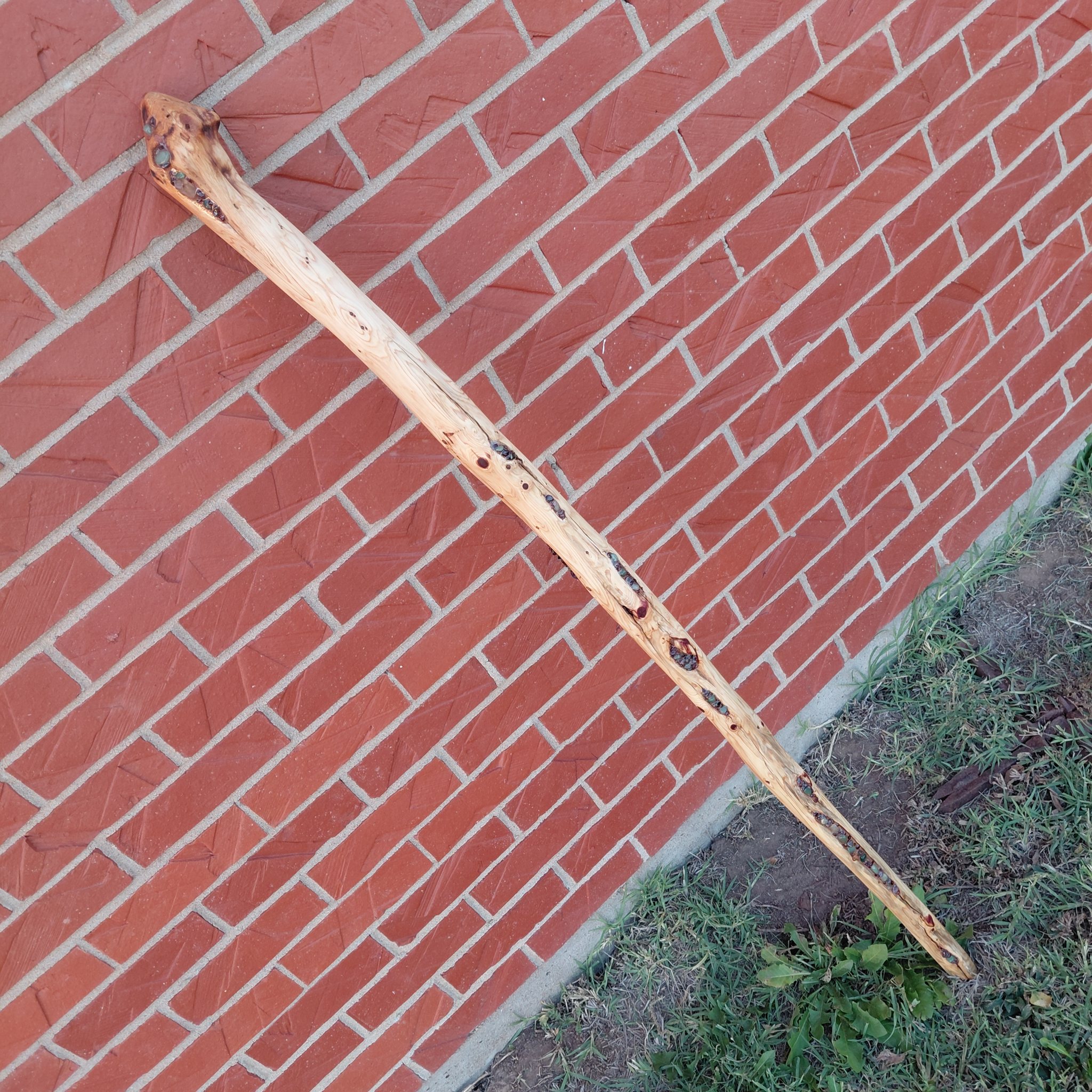
38 inches tall.
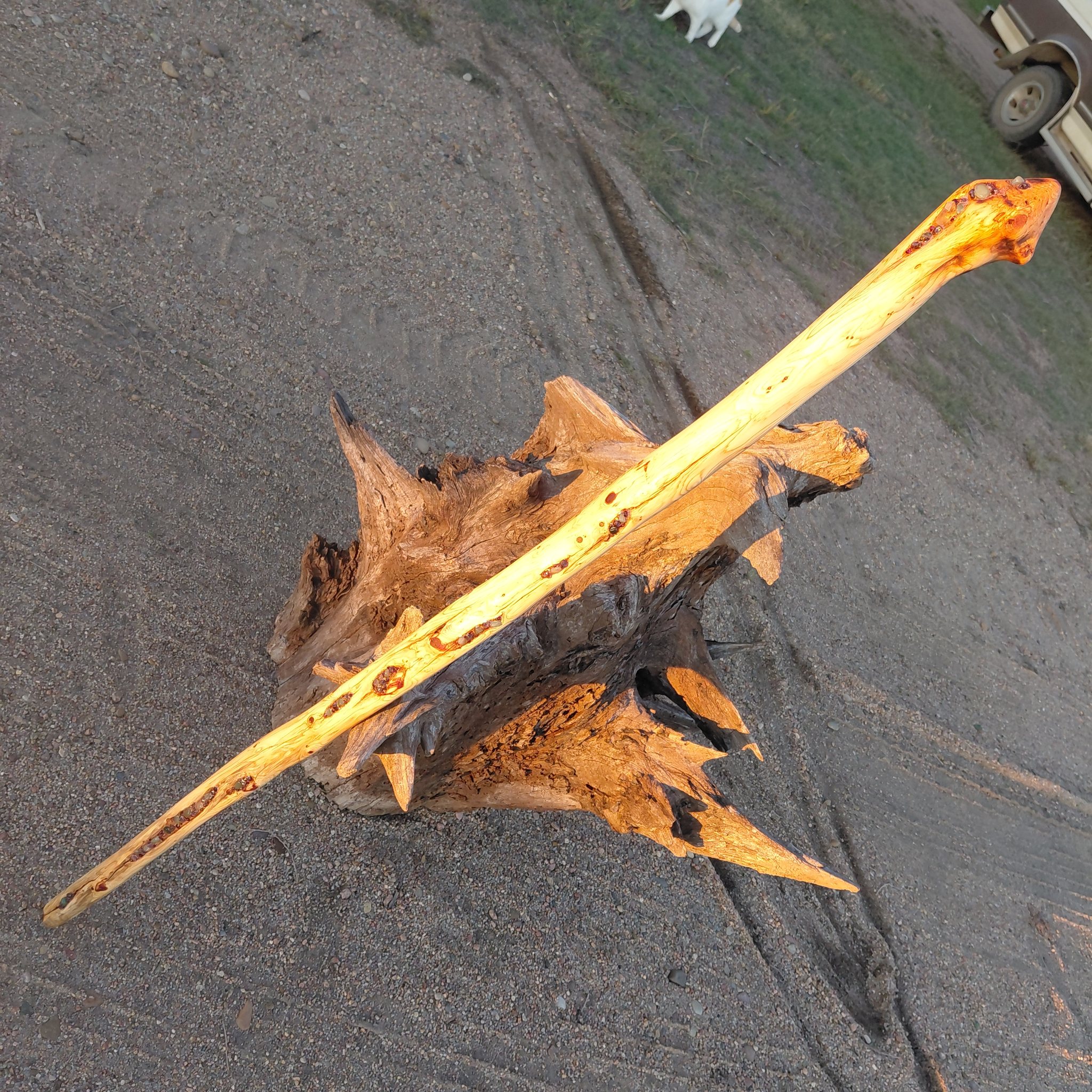
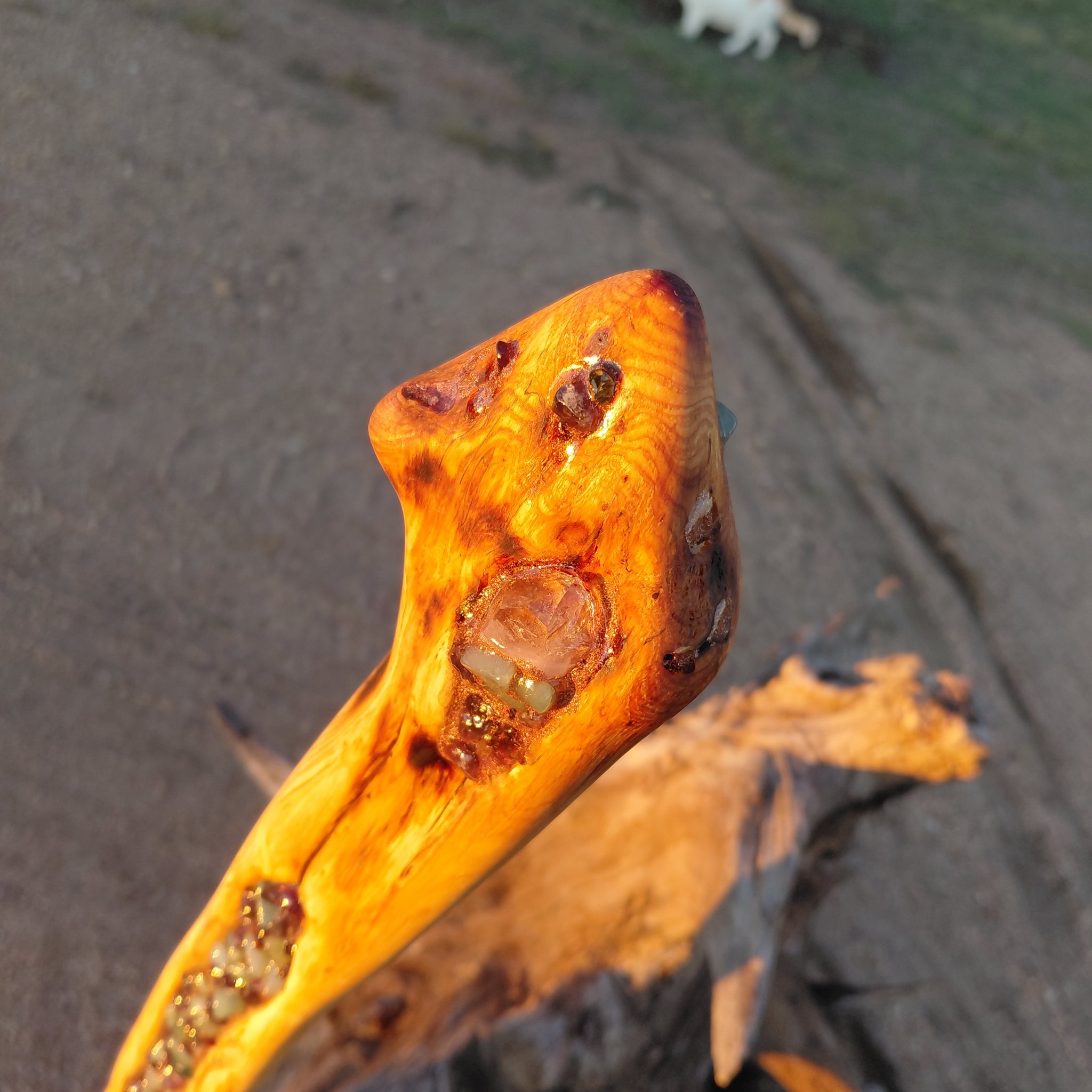
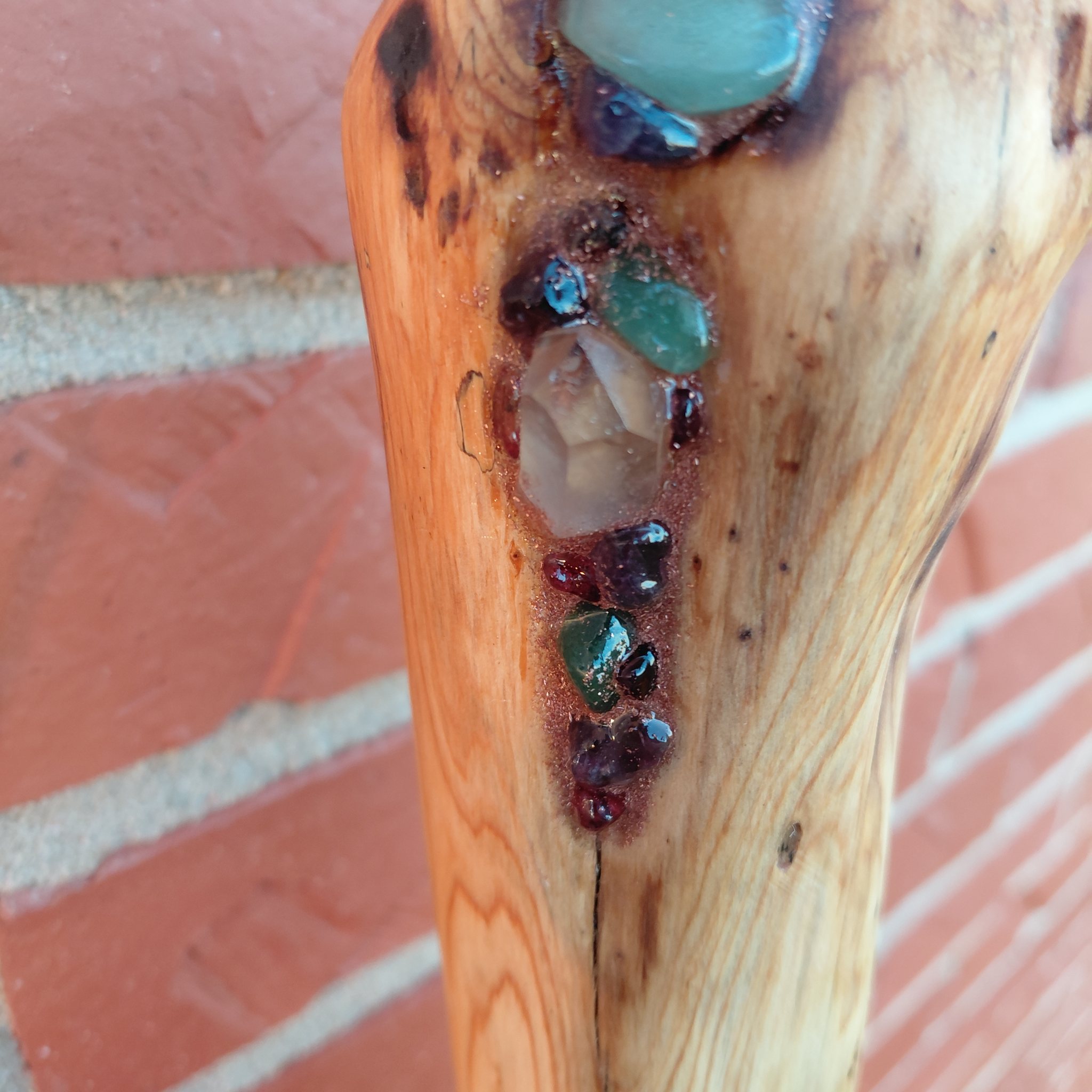
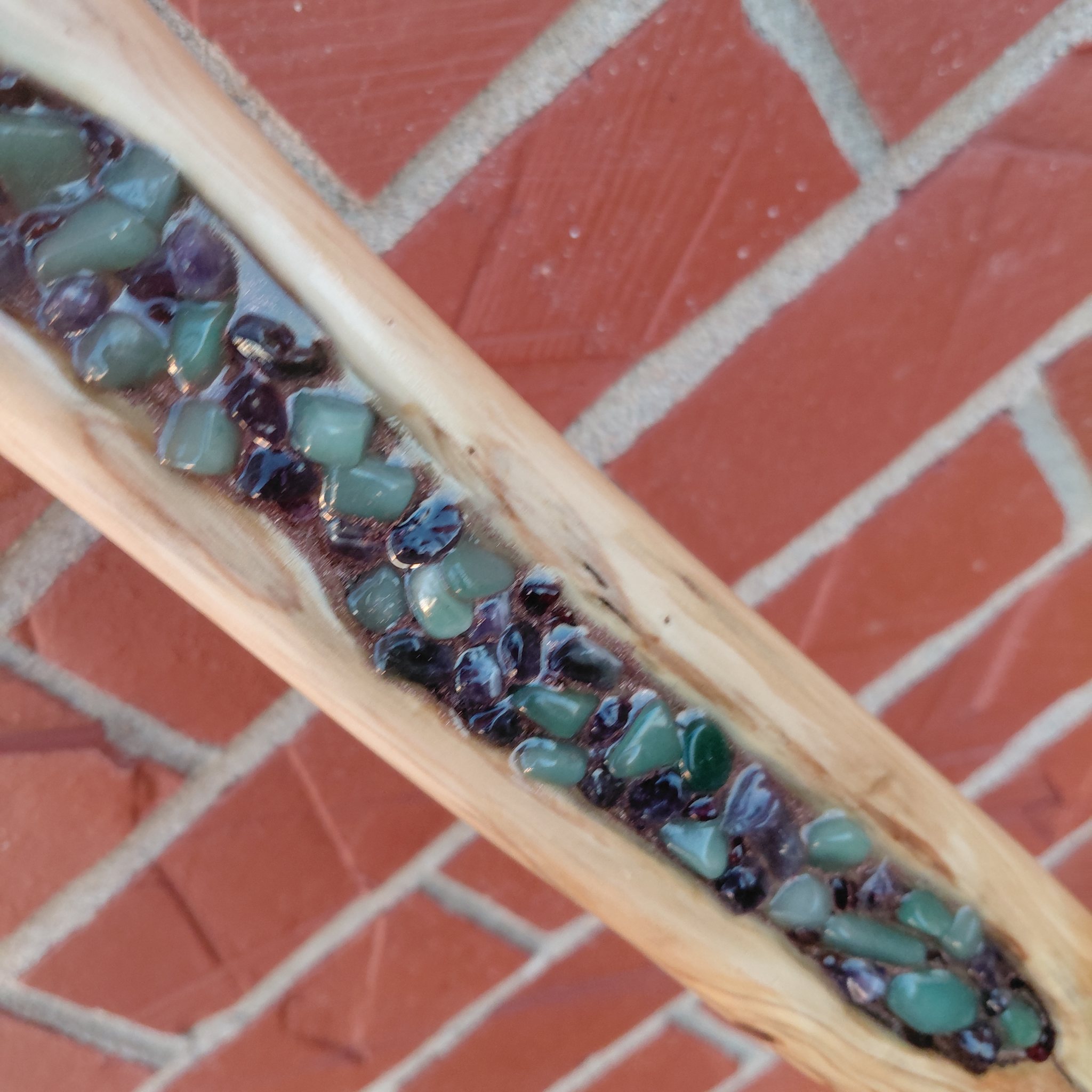
This is my latest magical staff, a really nice Eastern Red Cedar root ball walking stick. It's got amethyst, small garnet chips, green aventurine, copper shavings, and two clear quartz crystals, one on either side. The copper shavings make orgonite.
The smaller darker ones are garnets, the purple ones that are big are amethyst, and green aventurine.
Each one of these little scars, where a branch died or where it was damaged and healed, has crystals, with copper shavings and epoxy mixed in between.
I used the Dremel tool to clean up all of these scars. You can see some of the char from where I used fire, just a tiny bit, for the aesthetic. That's not from a wildfire, though. That's me.
Look at this one, the root ball. You can really see the grain patterns.
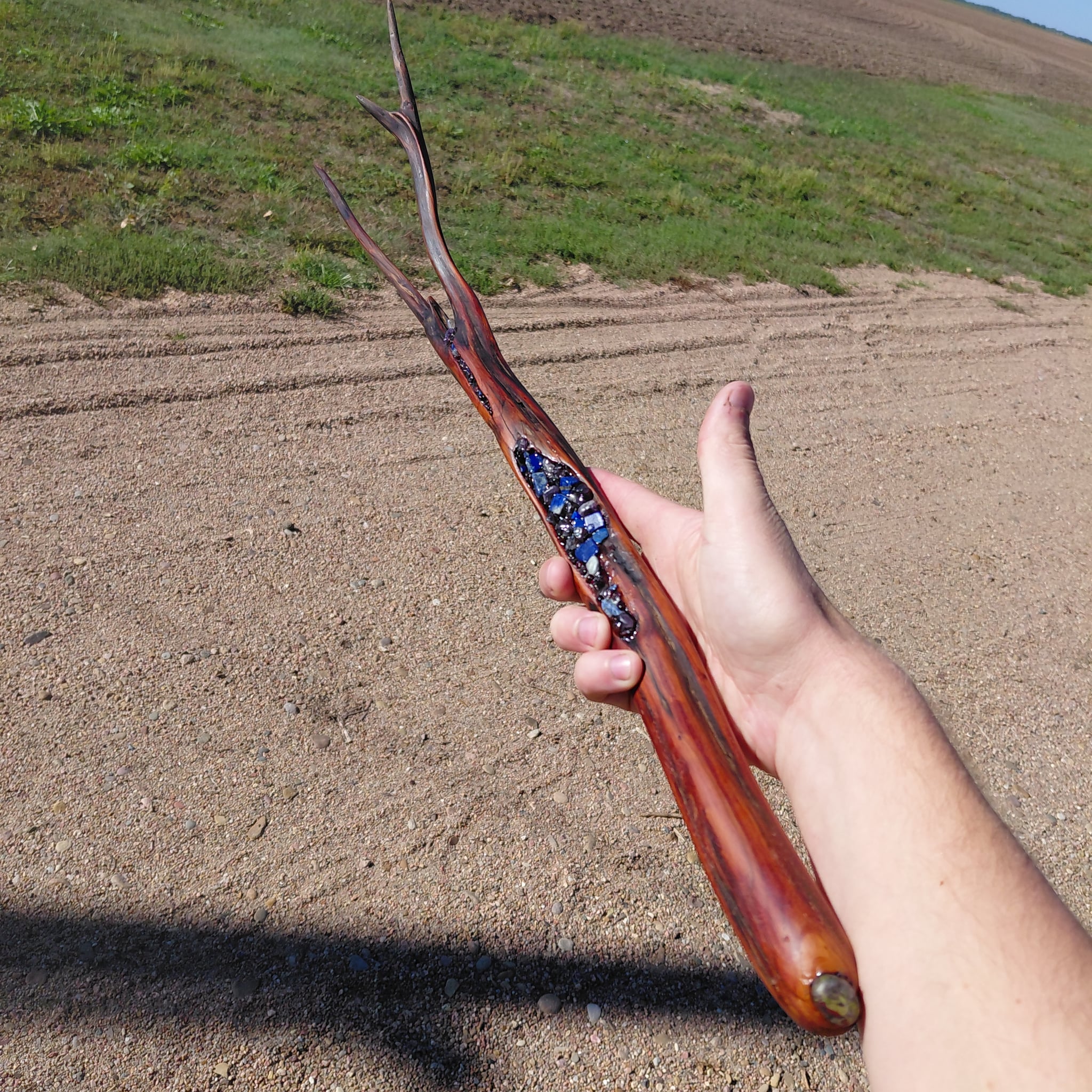
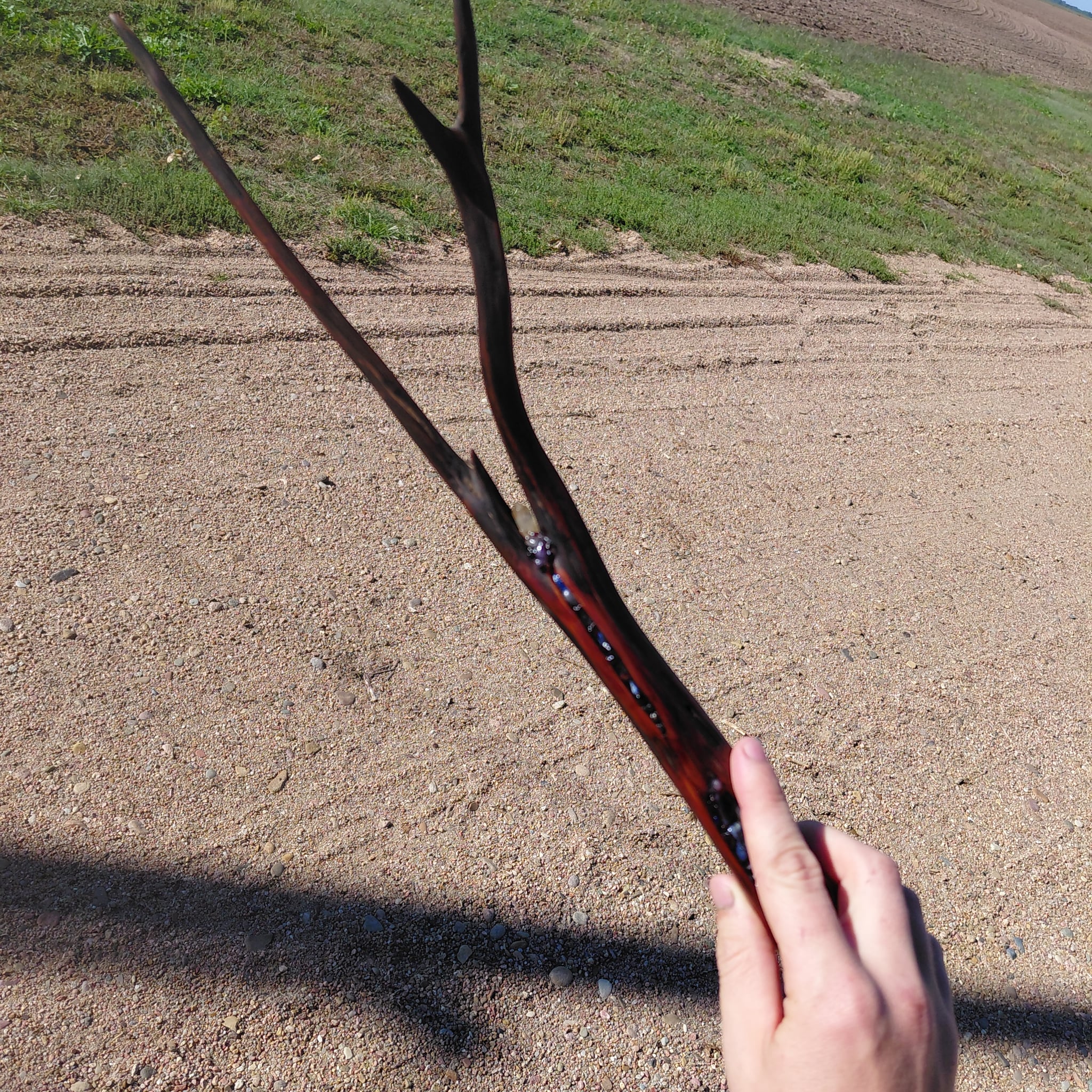
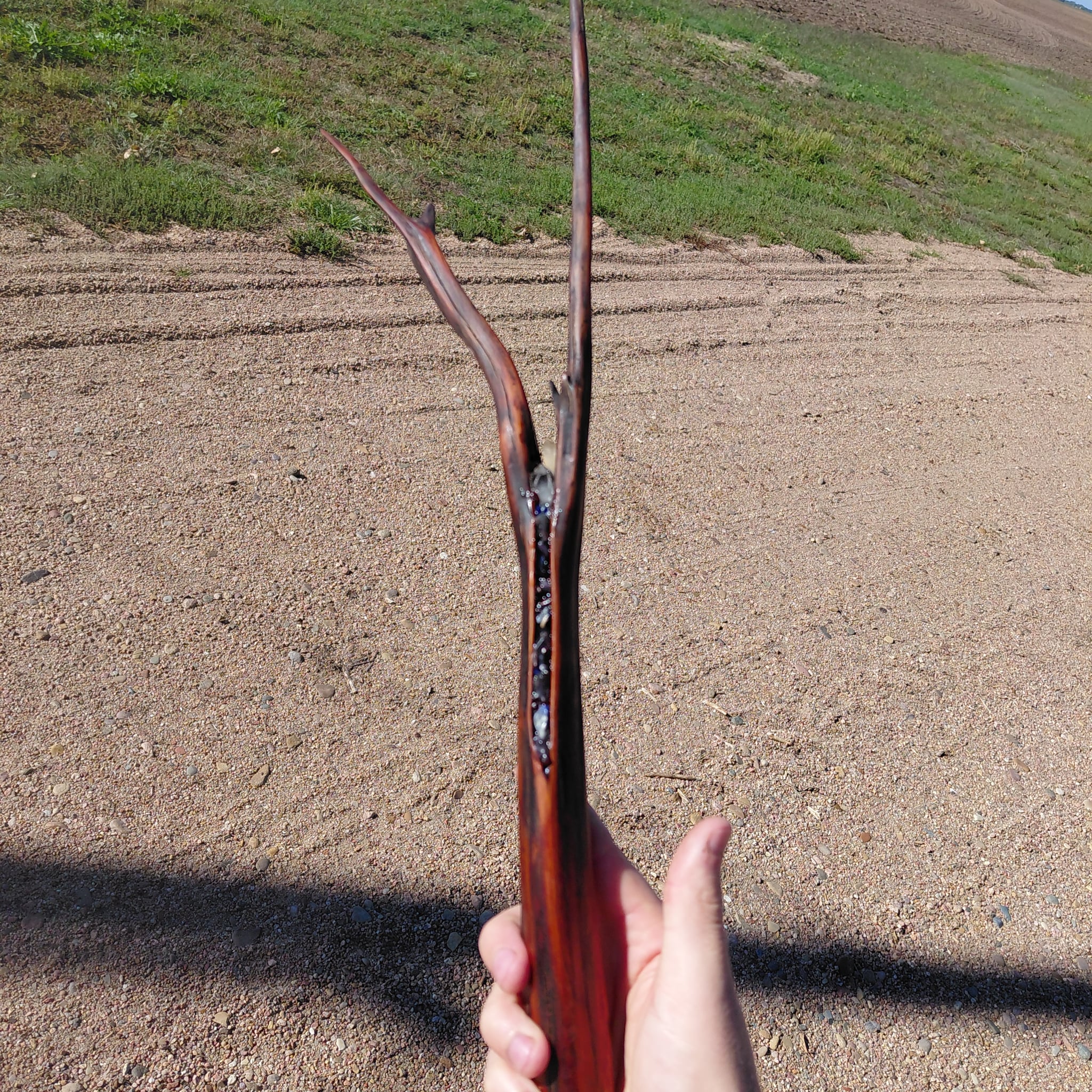
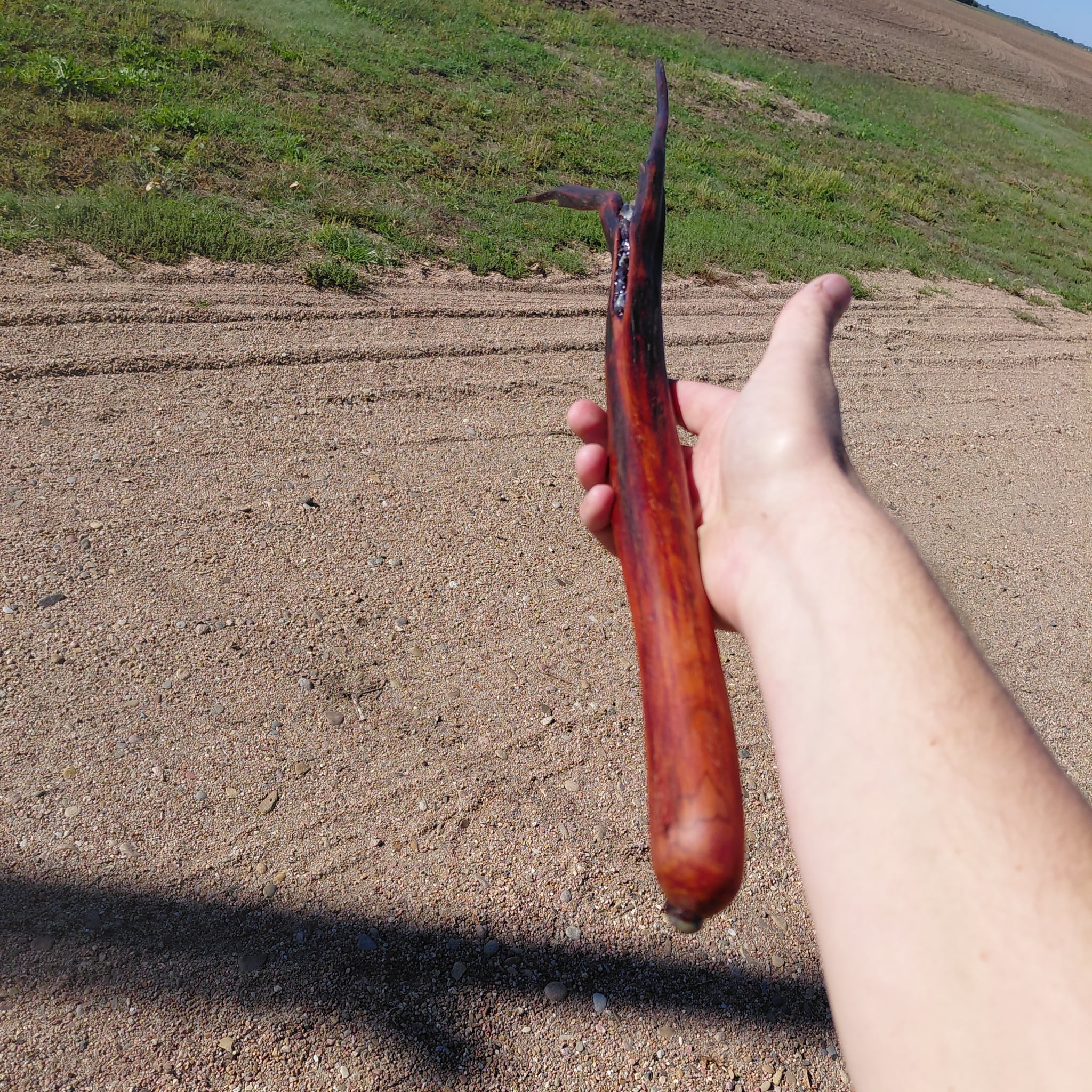
This right here is my latest Eastern Red Cedar wand. I specifically made this one to be a Samhain giveaway. It will be given away on the evening of Samhain on the 31st.
It's got lapis lazuli, garnets, and amethyst, as well as a citrine point and a clear quartz point, and a bloodstone with some more garnets. The garnets are the tiny ones, the amethysts are the slightly larger ones, and the lapis lazuli are obviously those big blue ones.
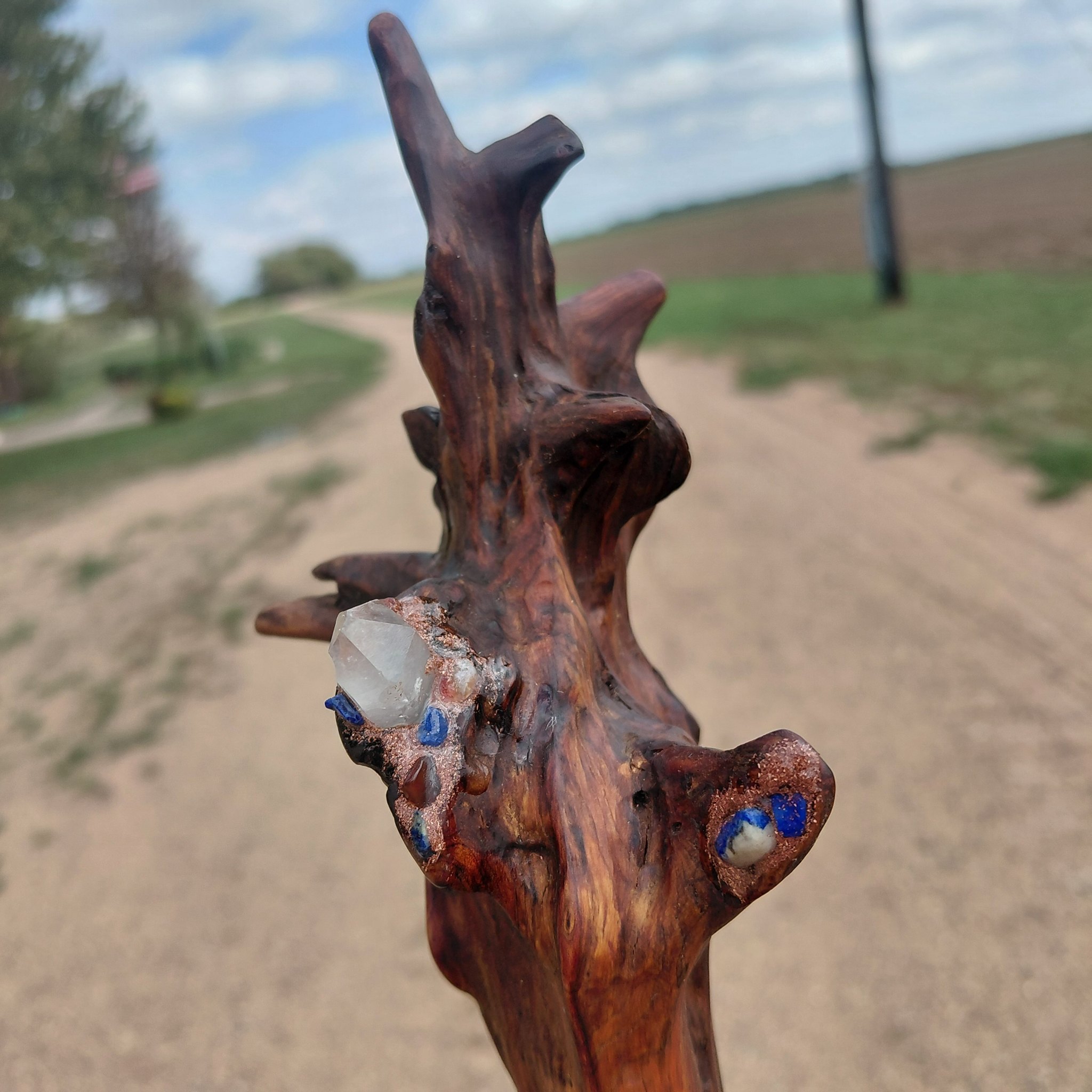
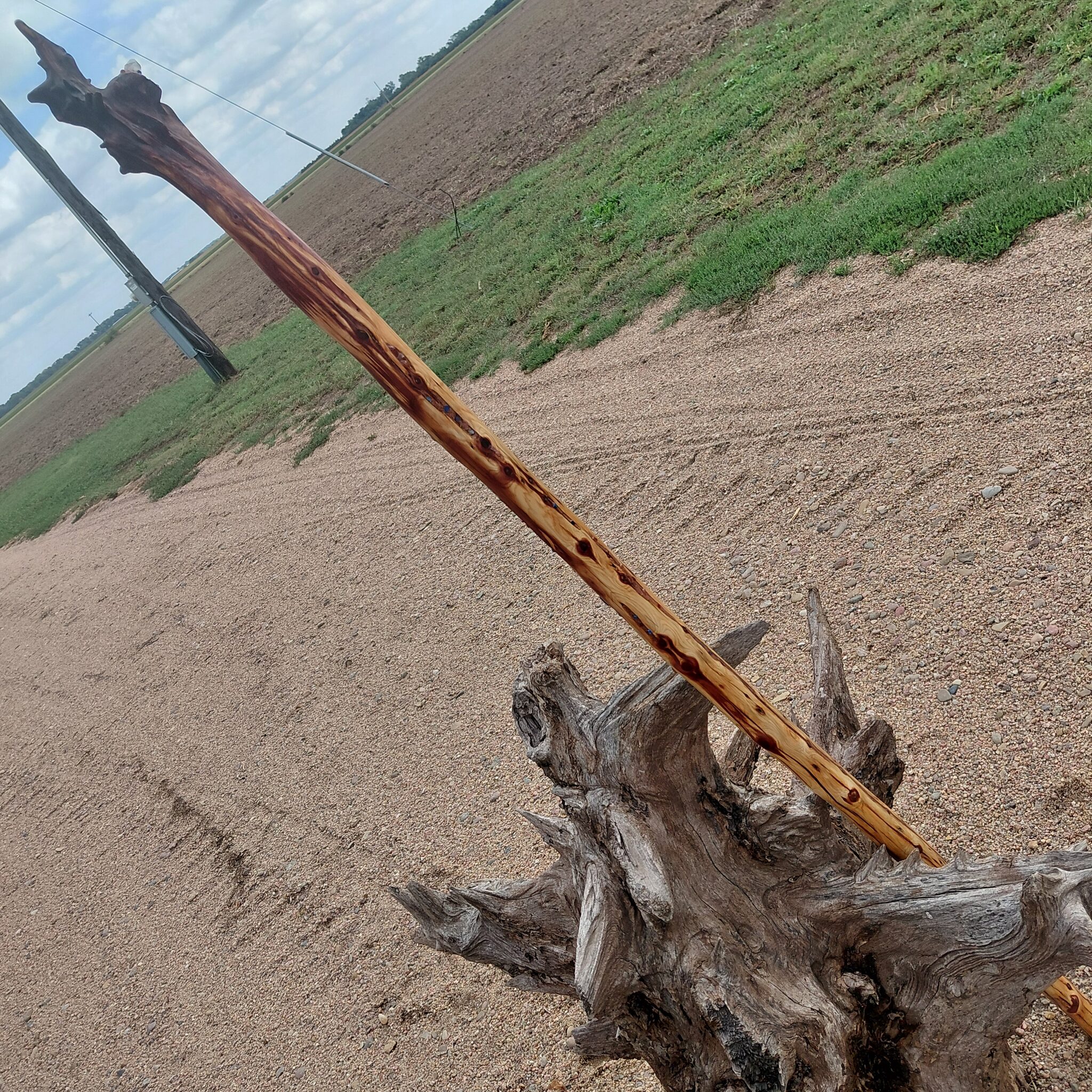
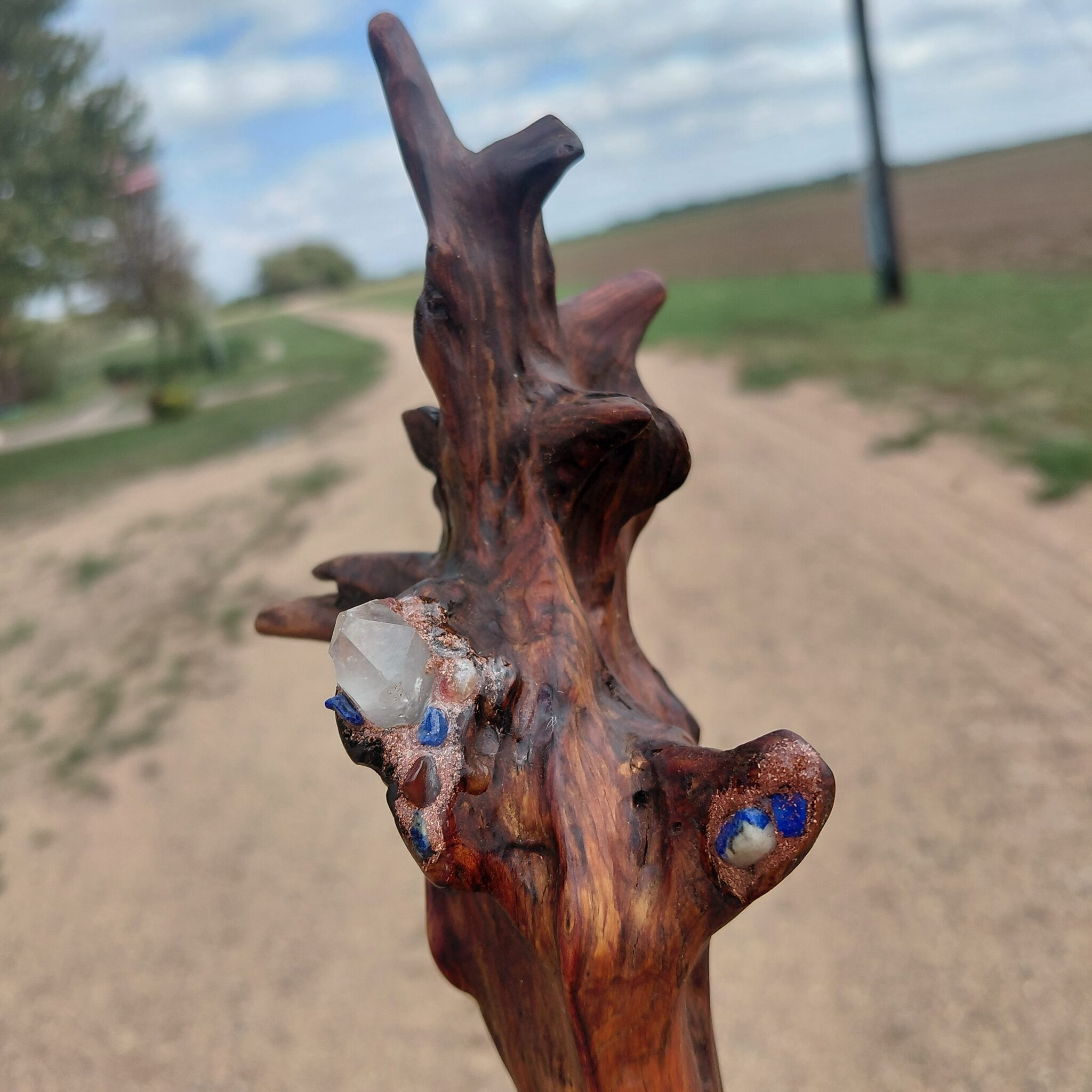
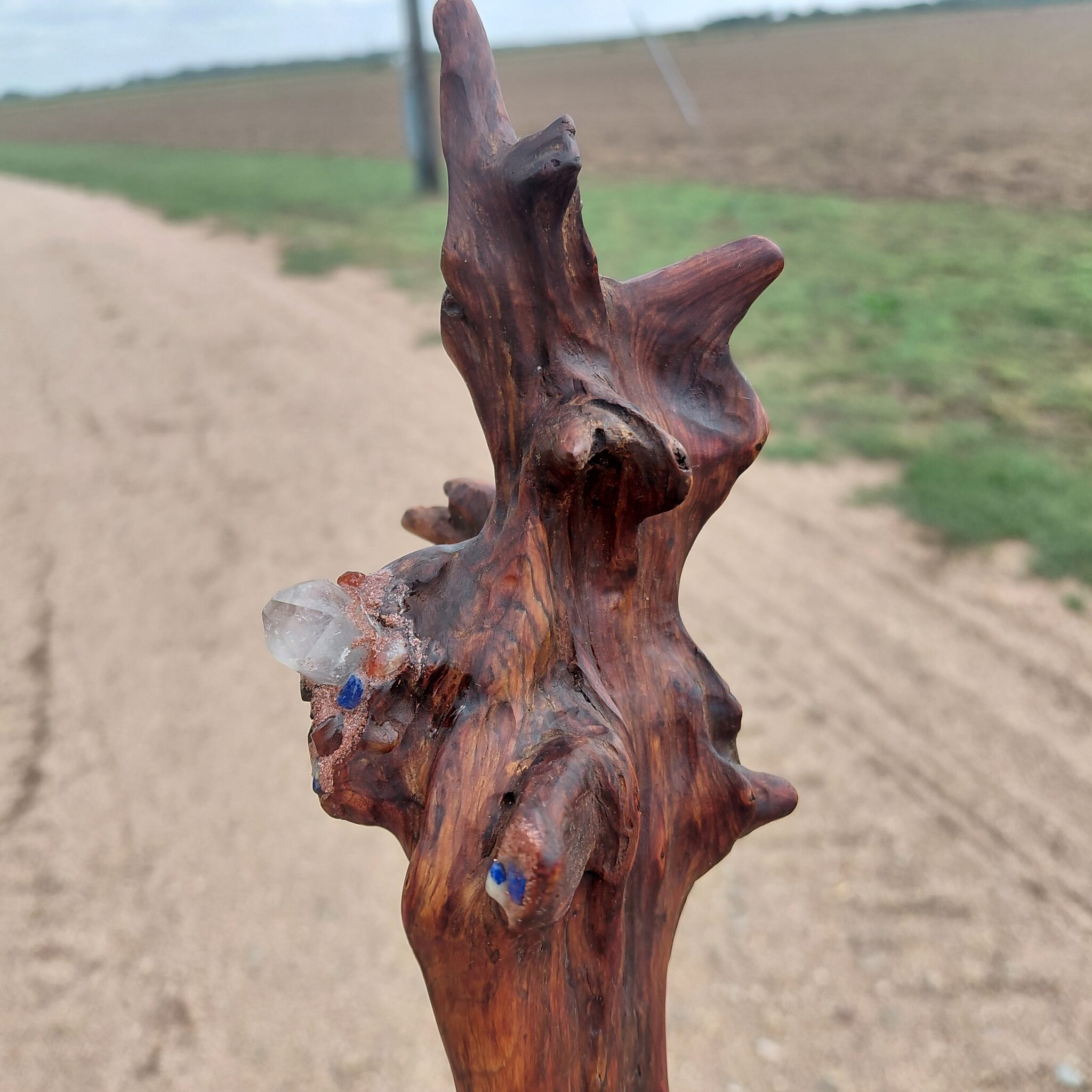
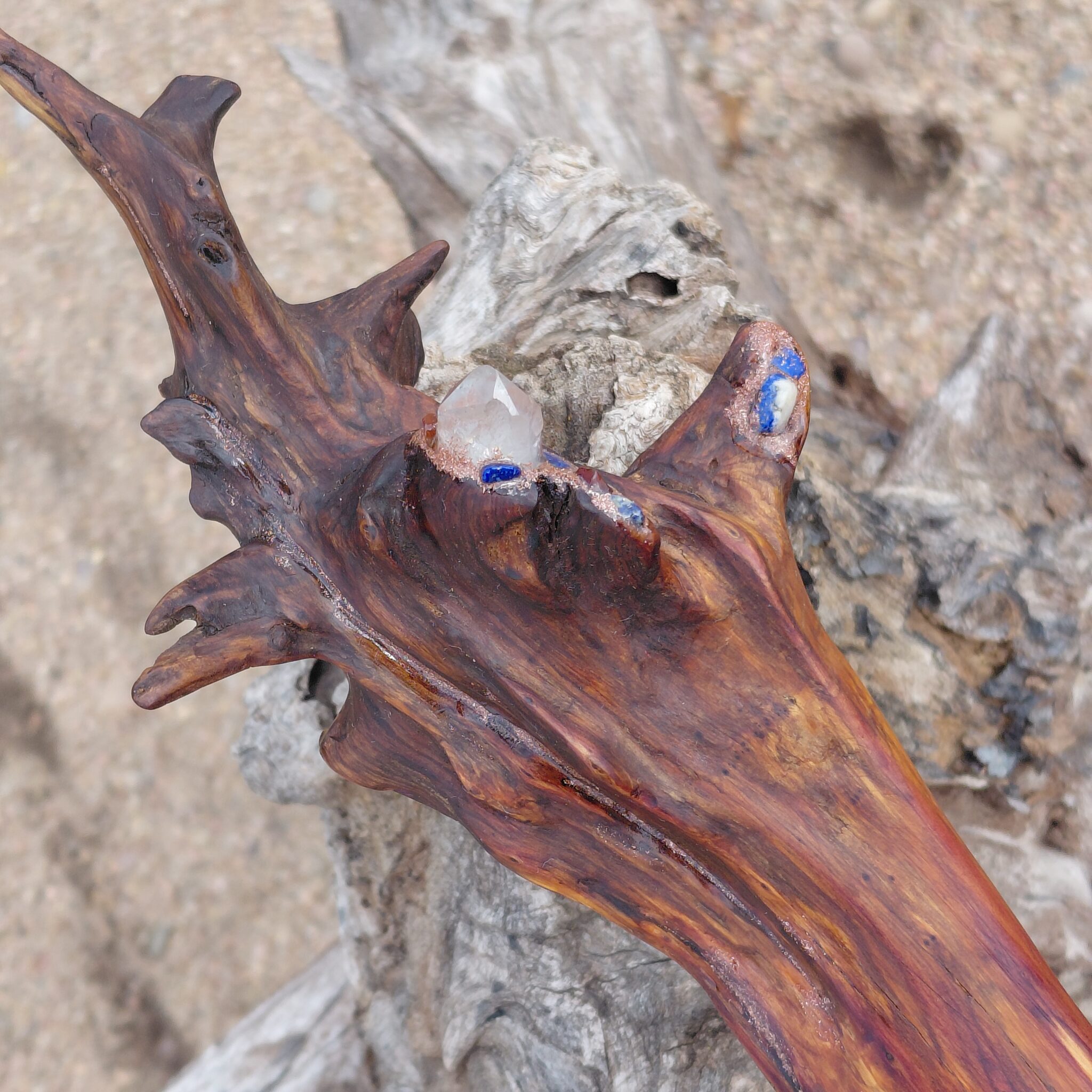
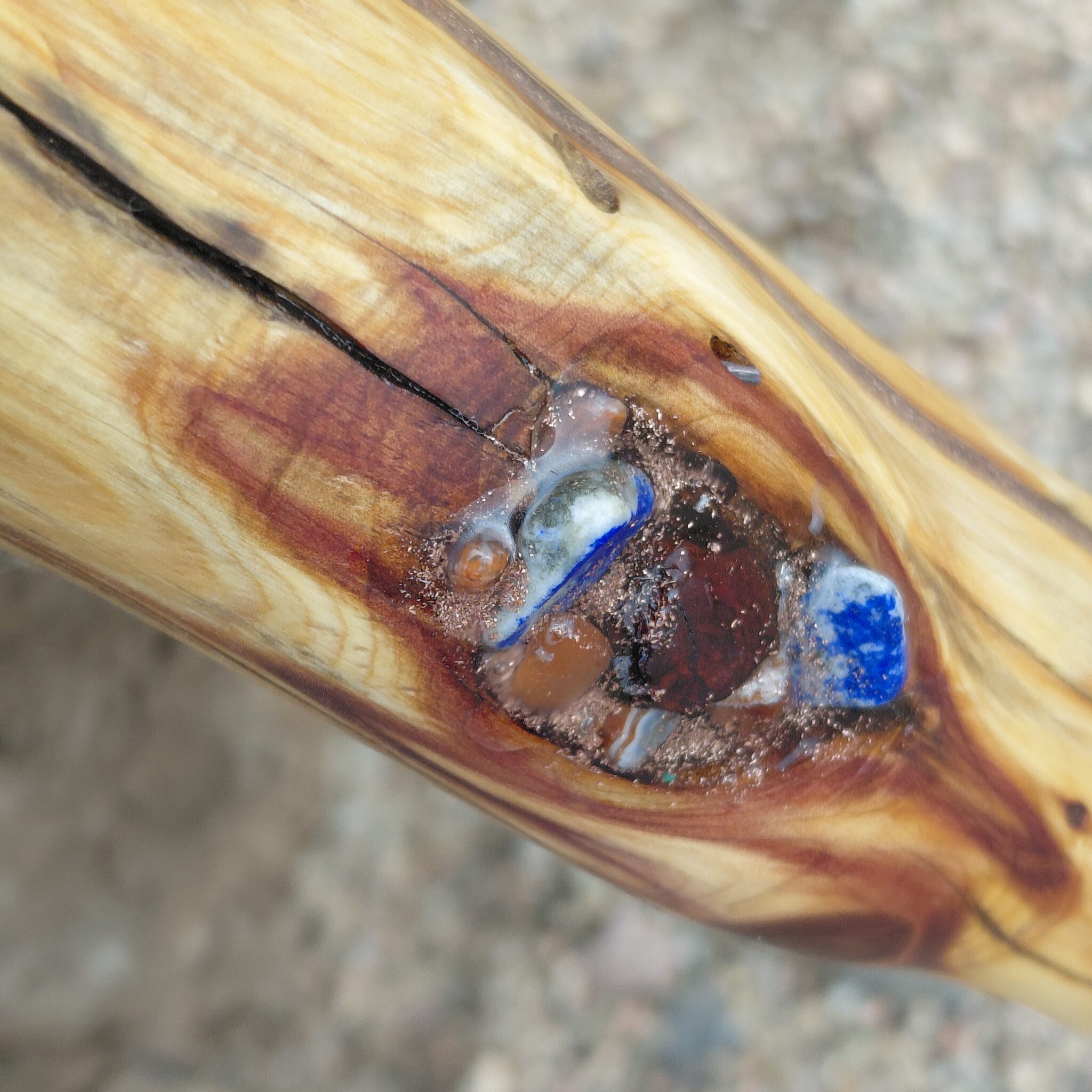
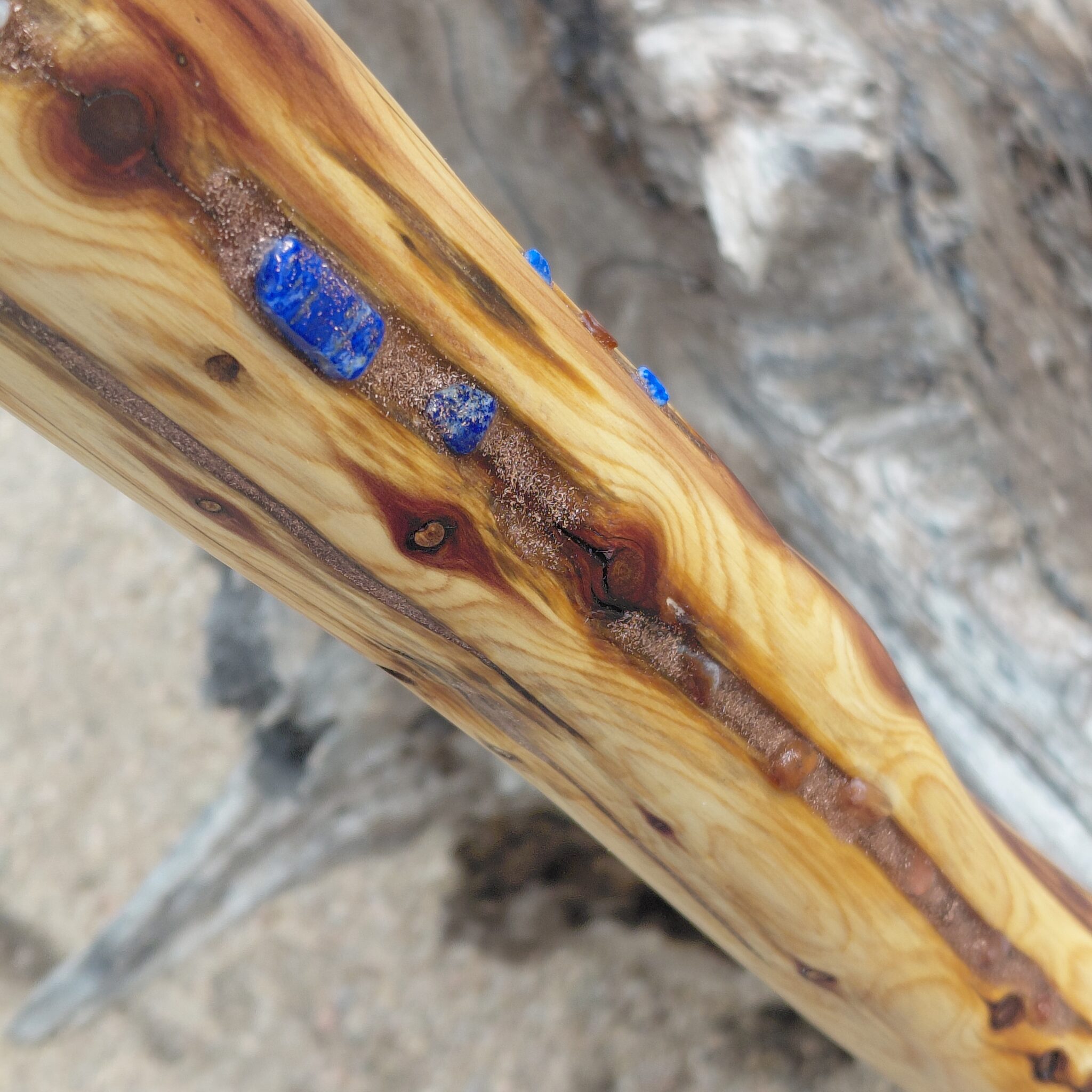
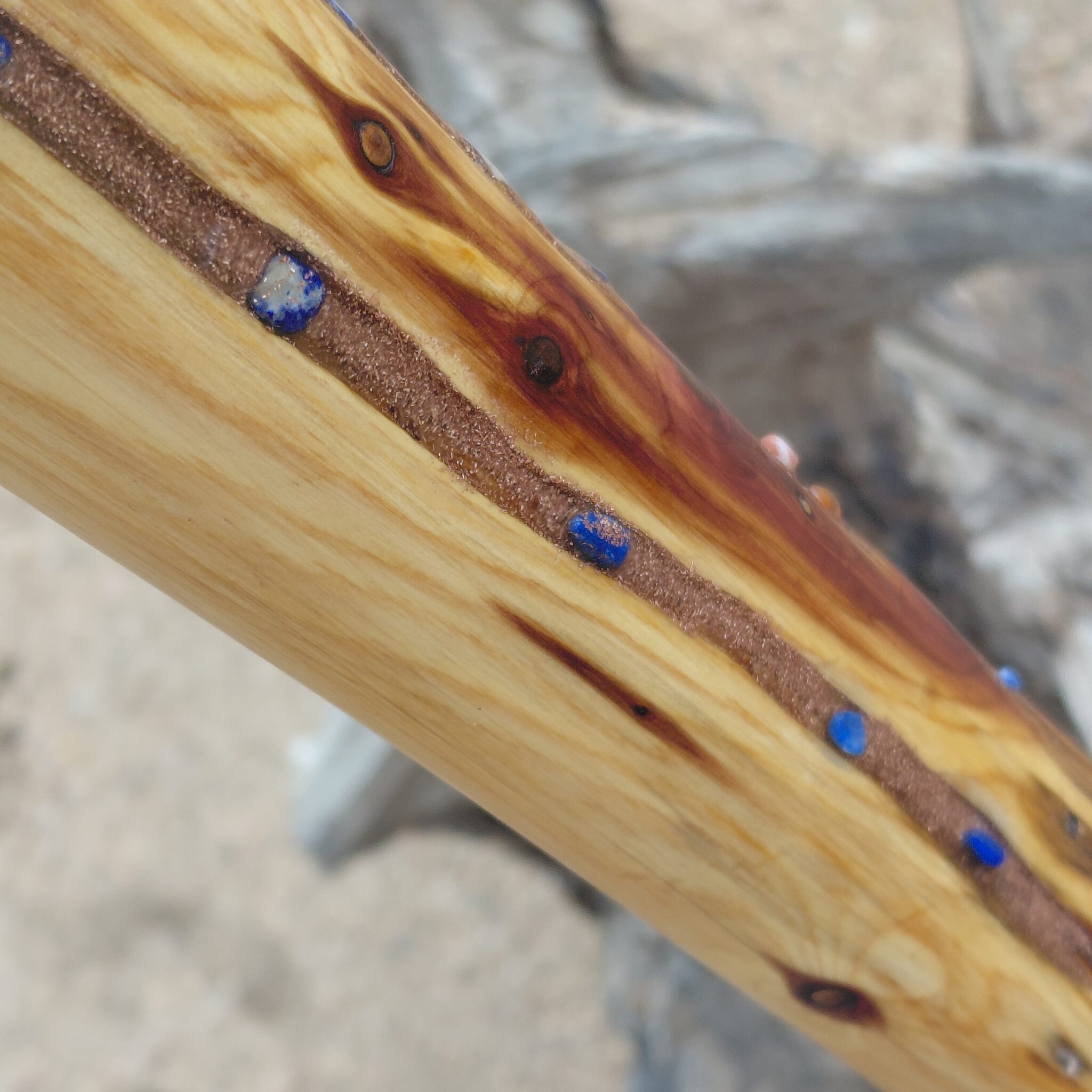
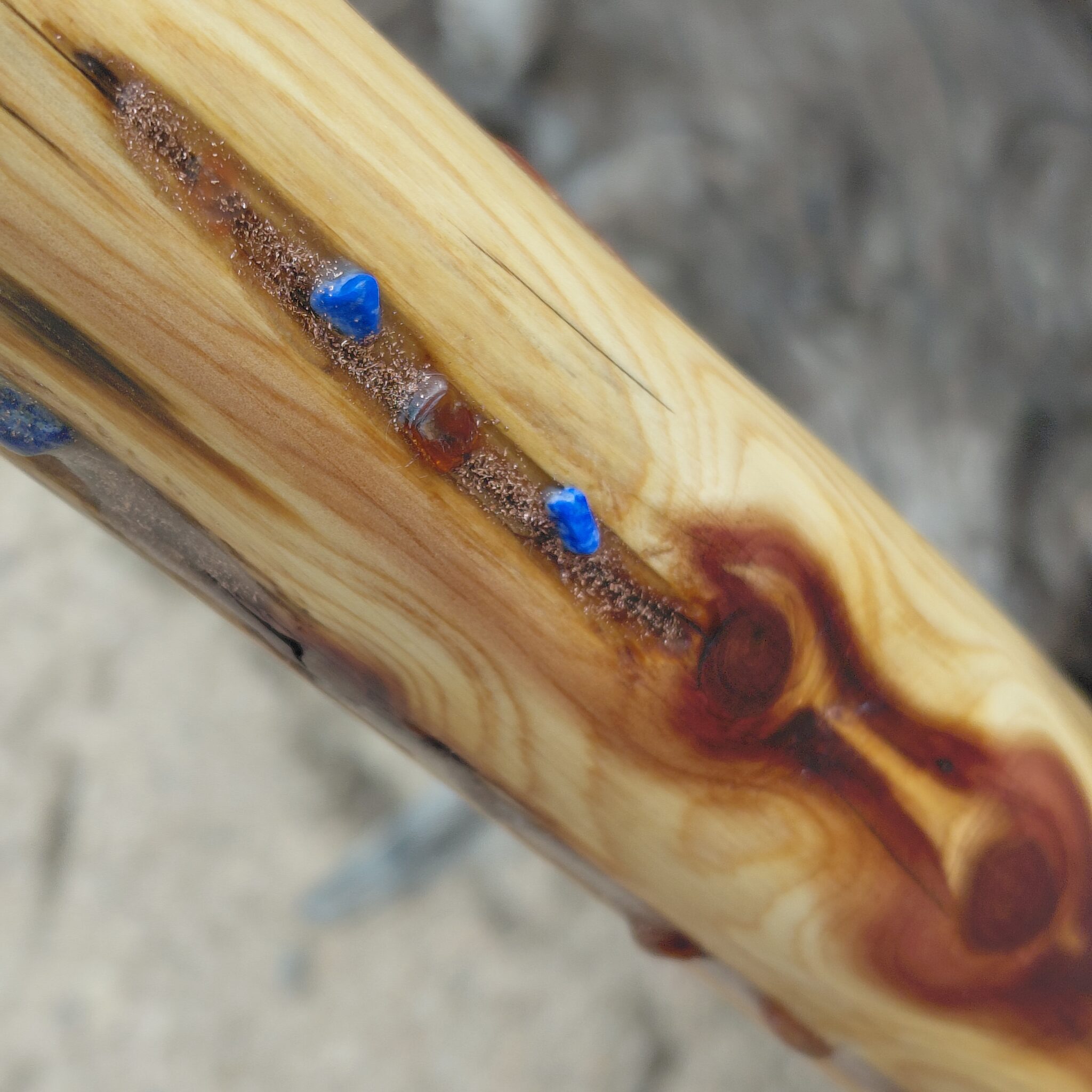
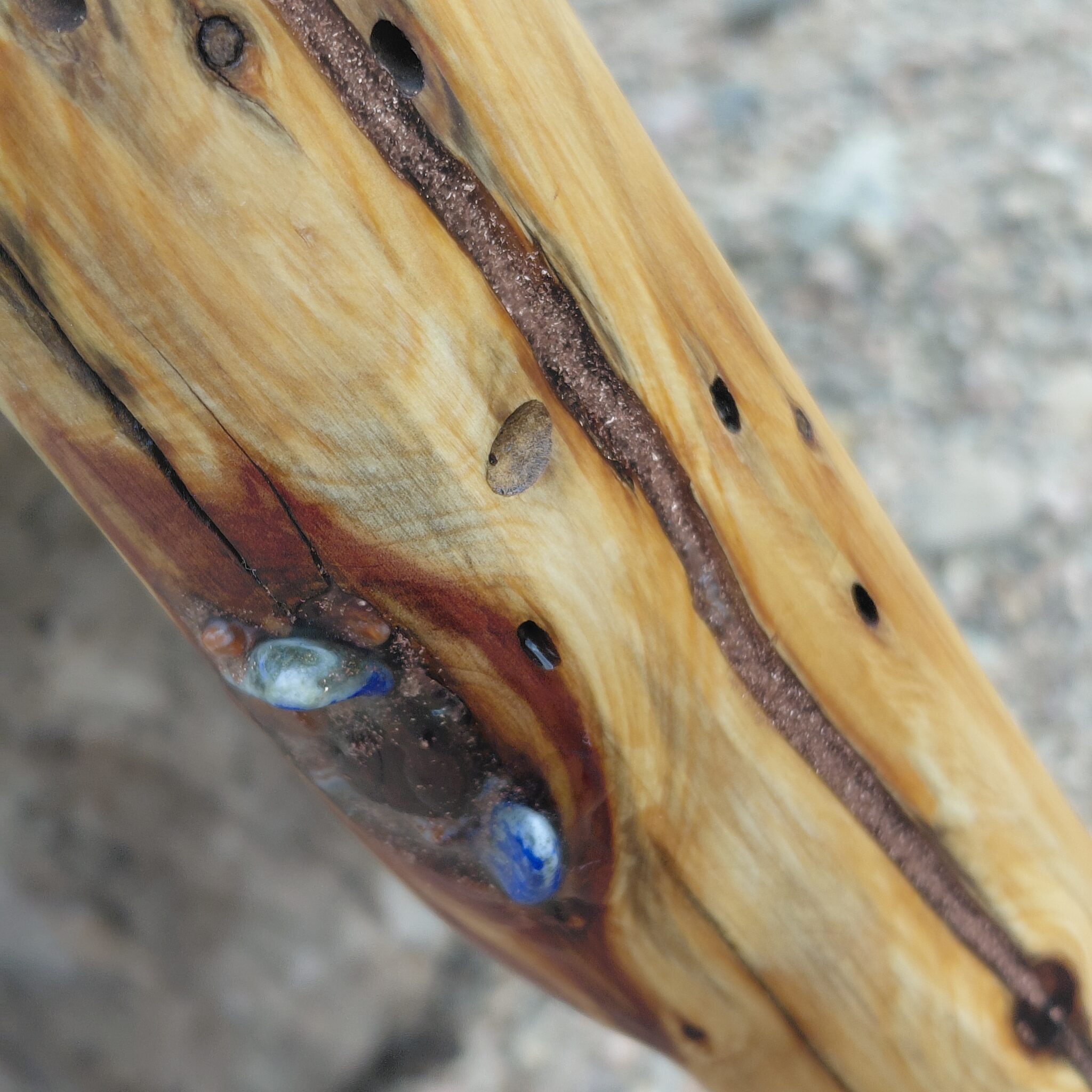
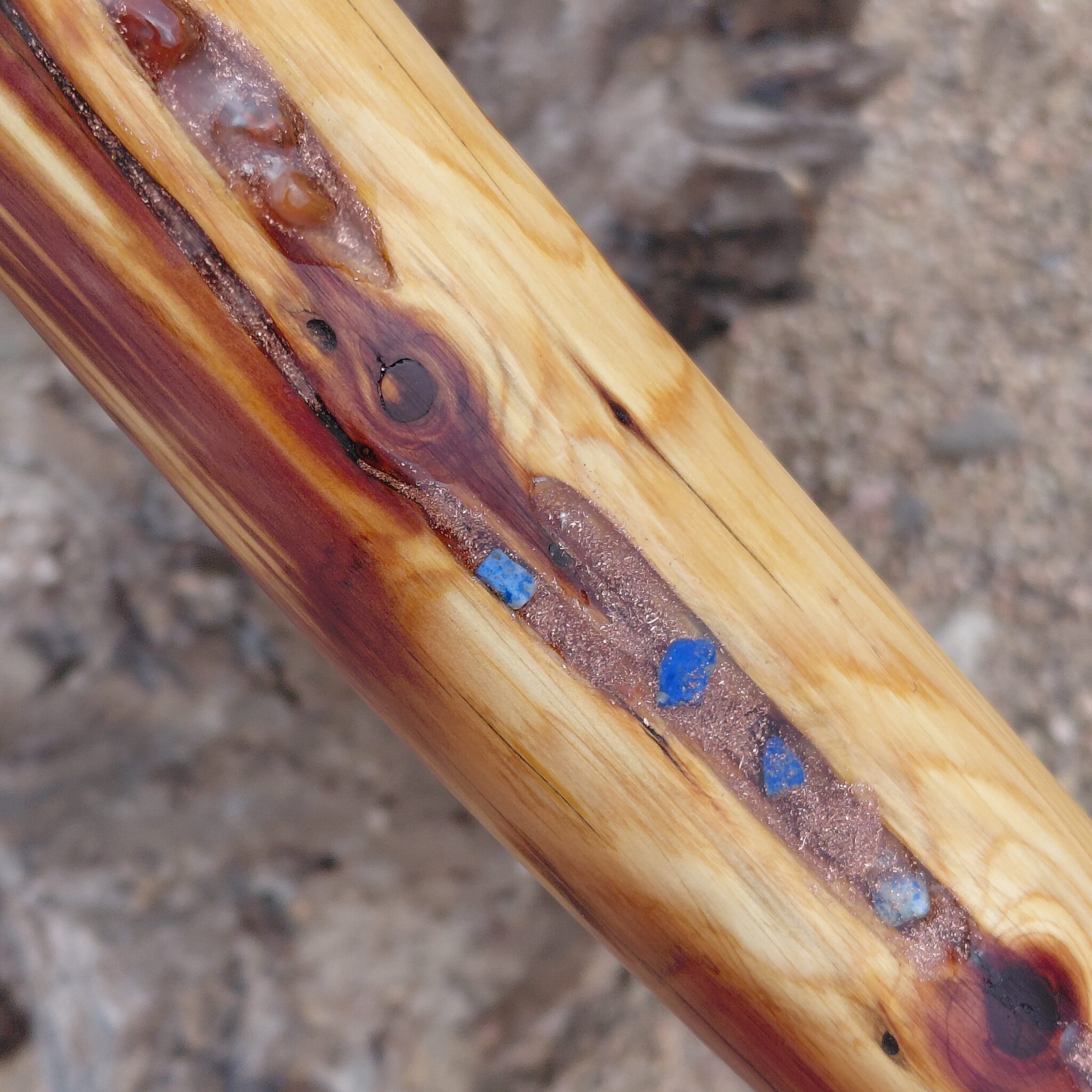
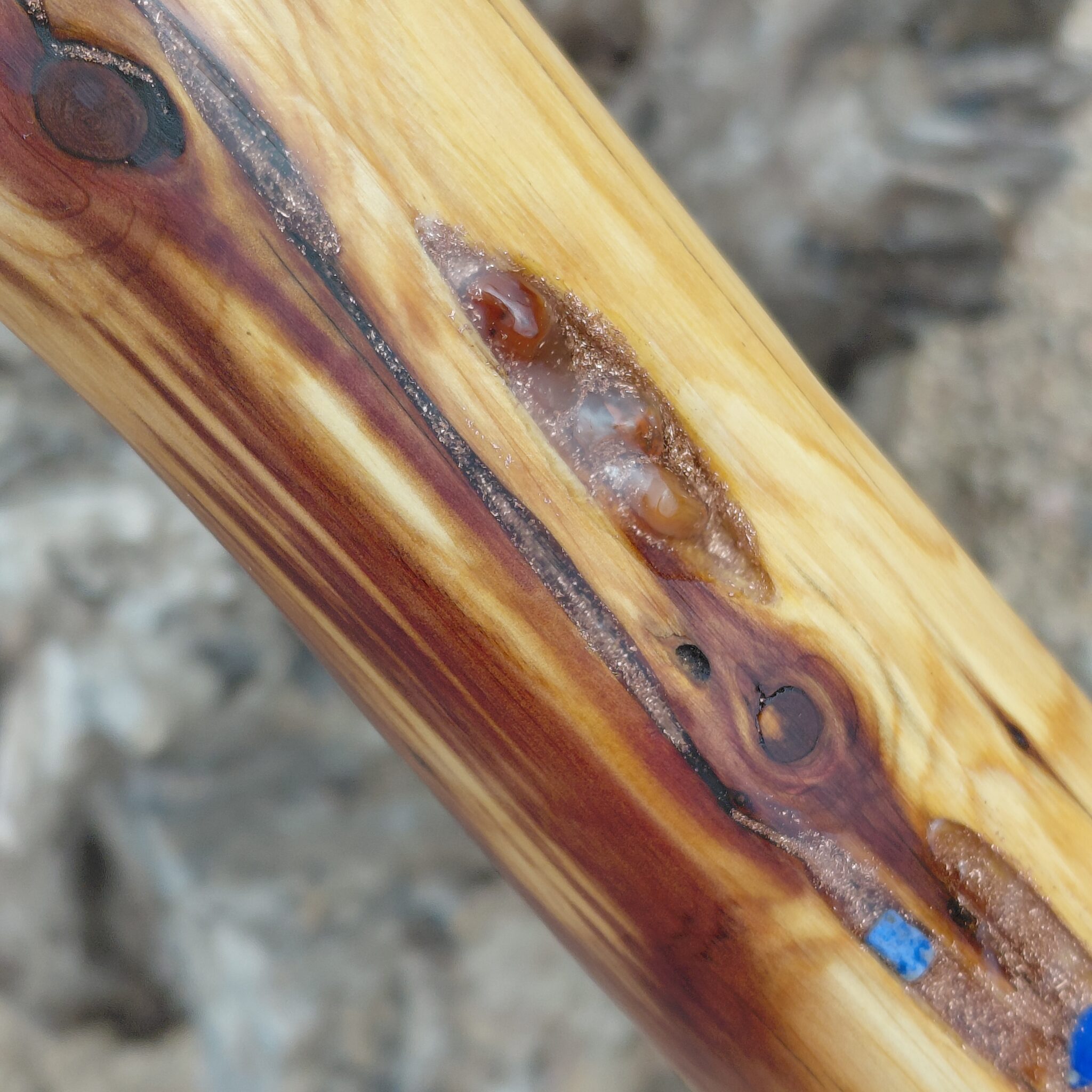
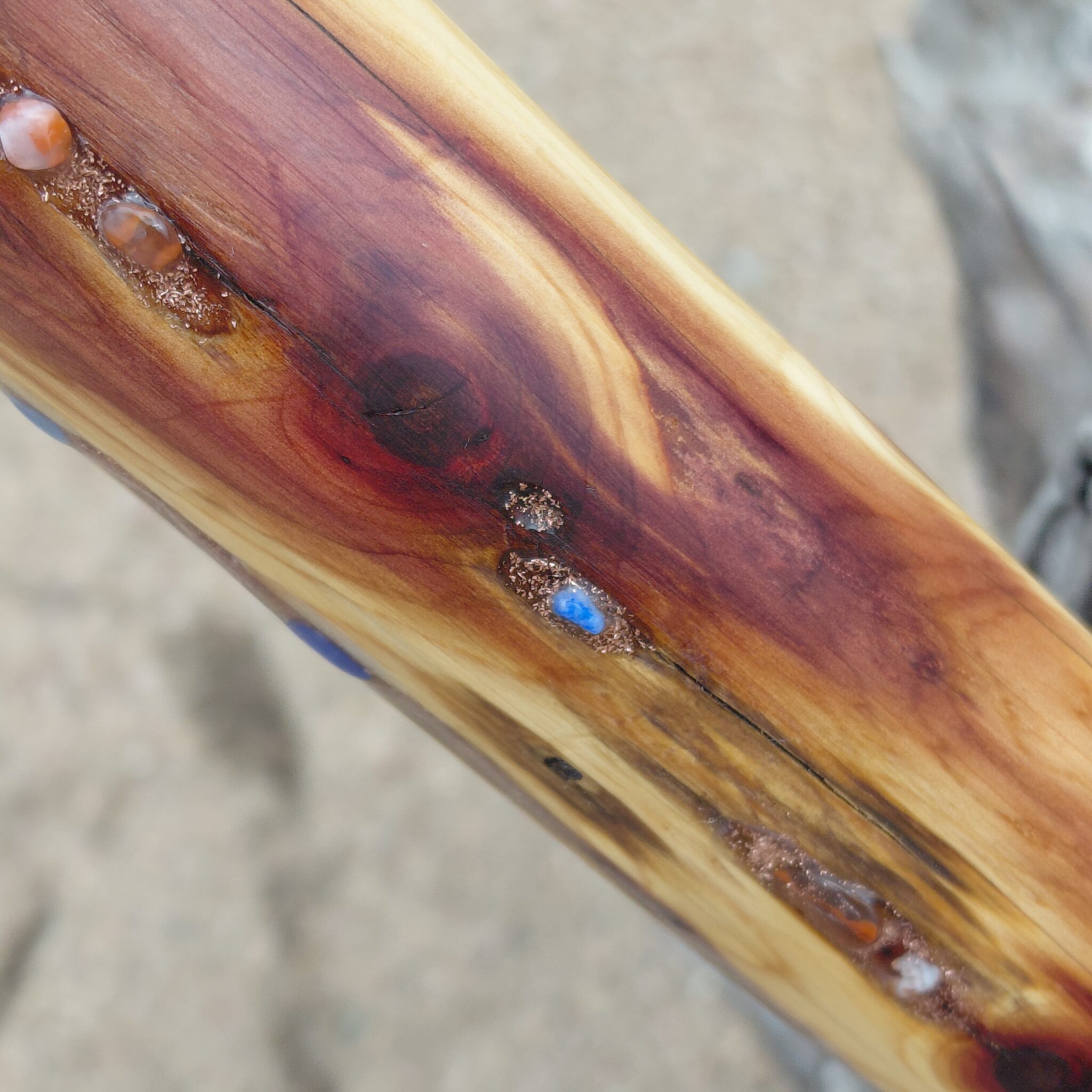
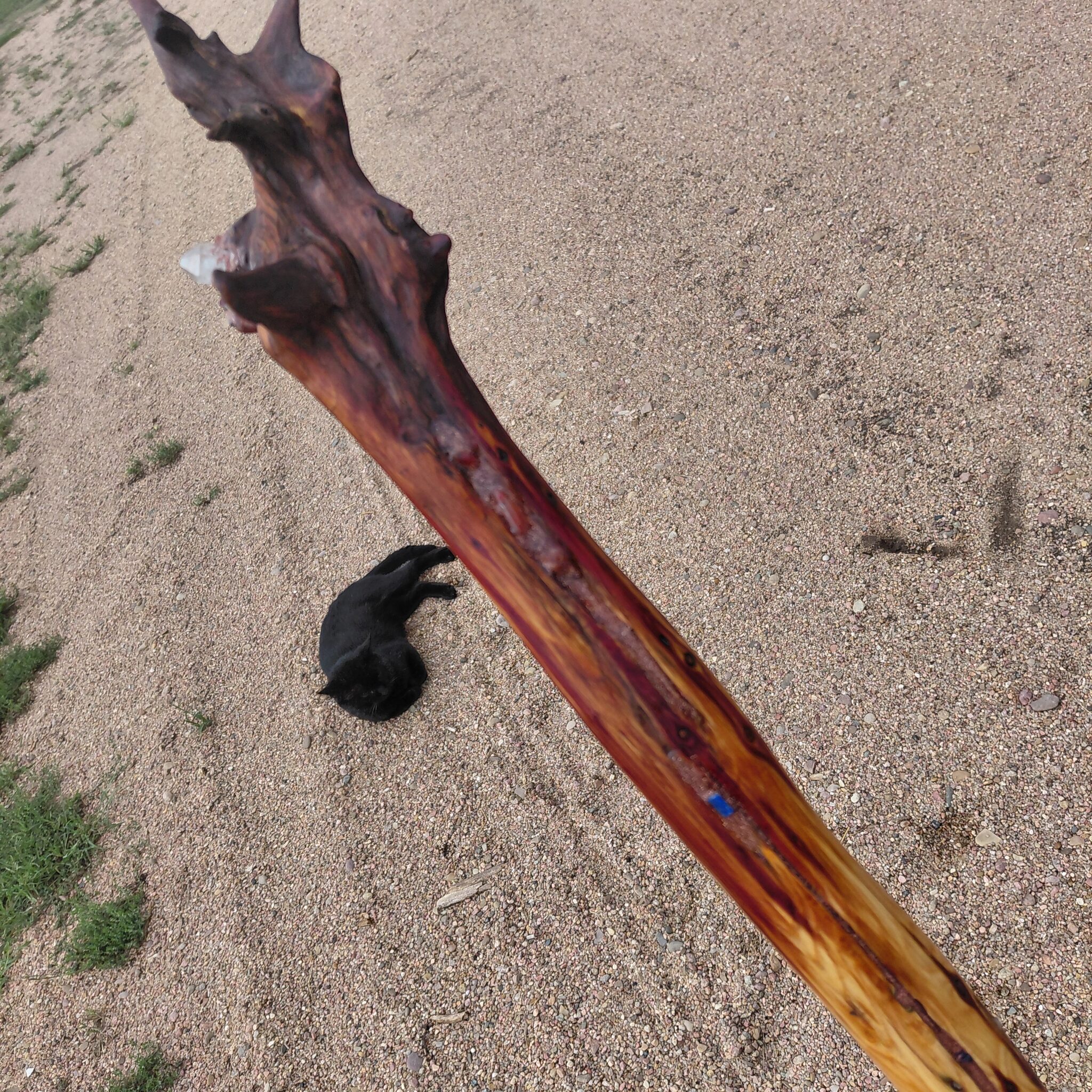
This root ball wizard staff is eastern red cedar, about five feet tall, with a clear quartz point set in a rotted-out hole at the top. Lapis lazuli and carnelian fill the insect hollows around the quartz and every crack they would fit in, up and down the shaft. The larger cracks and the hollows around them also carry resin epoxy and copper shavings, which make orgonite.
The root ball forms the crown, dark red and grown into knobs and forks. Below it the shaft runs pale cream sapwood streaked with red heartwood and dotted with dark knots, and the copper glints inside the resin wherever a larger crack runs along the grain. It is finished in my own boiled linseed oil and beeswax, and it works as a walking staff on uneven ground as well as on the altar.
The cedar came from the family shelterbelt in central Kansas. Nothing living was cut for it. Every larger crack was sealed first with a slow-setting two-part epoxy, because two-part soaks in and bonds with the wood, while UV-set resin only sets where light can reach it. Once that seal was in, I filled the rest with the stones, the copper shavings and the UV-set resin.
Agrippa groups cedars and junipers with Sol and Jupiter, and Culpeper puts juniper under the Sun. The stones on this staff follow those two lines. Carnelian is a Sun stone of vitality and will. Lapis lazuli is Jupiter's stone of truth and wisdom, deep blue flecked with pyrite like a night sky, the stone Egyptian priests wore and medieval painters ground into ultramarine worth more than gold. Clear quartz sits highest, in the root ball, the part of the tree that grew underground, and in modern crystal practice it strengthens whatever it is set against. The copper keeps its own register under Venus, harmony and attraction. Cedar's oils resist rot and insects, and the stones sit exactly where this root gave way to both.
All of this is possible because I offloaded so much to my AI allies.