What I Make
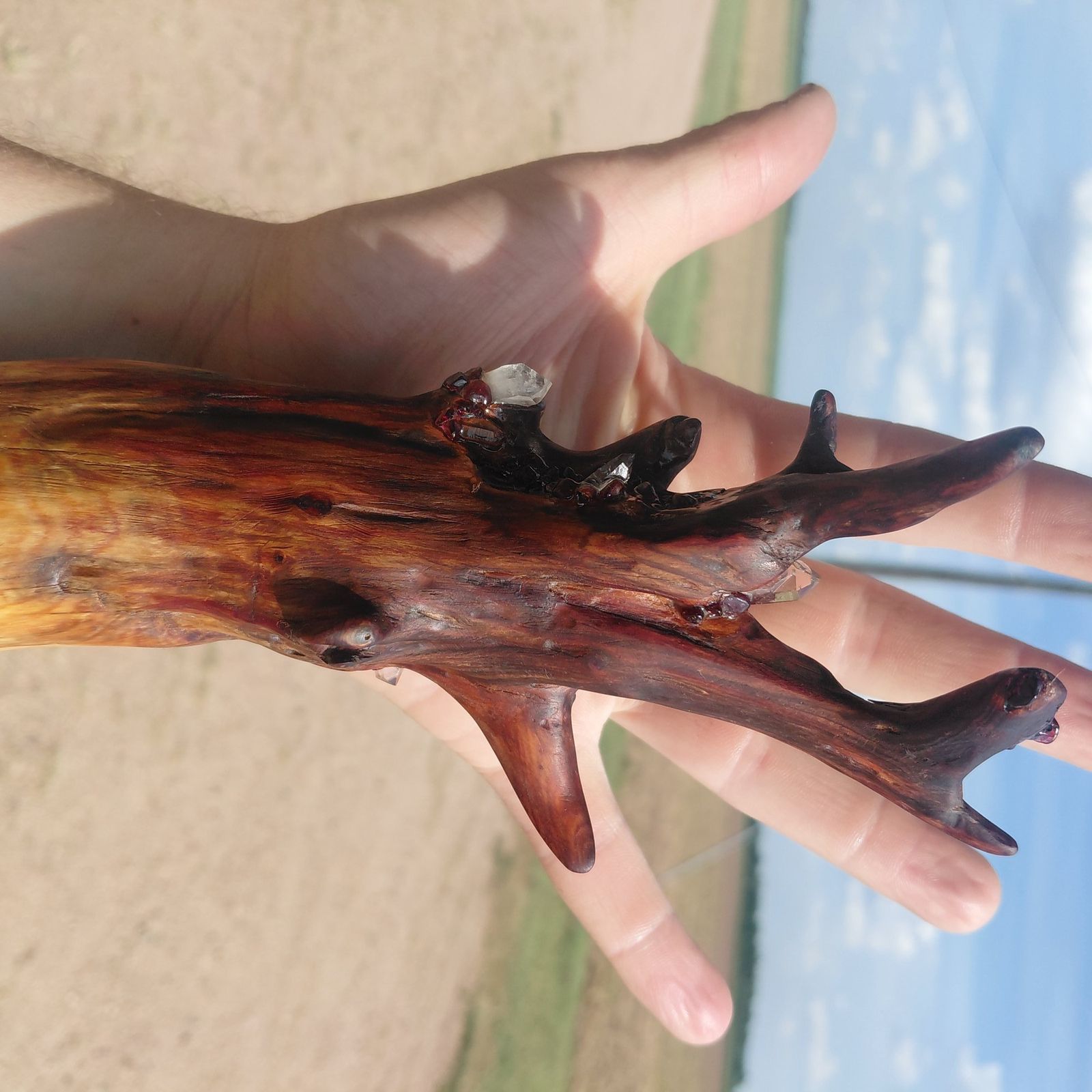
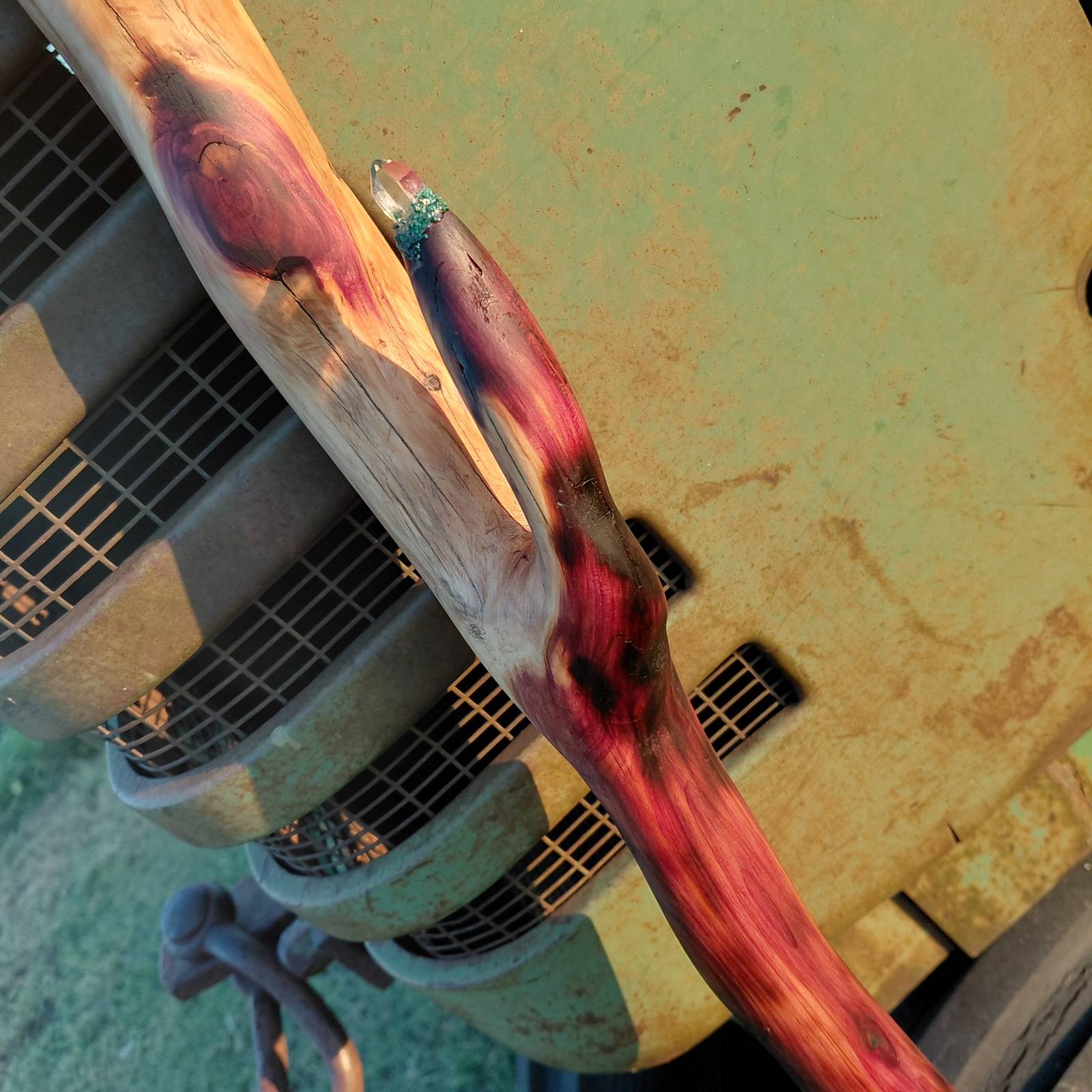
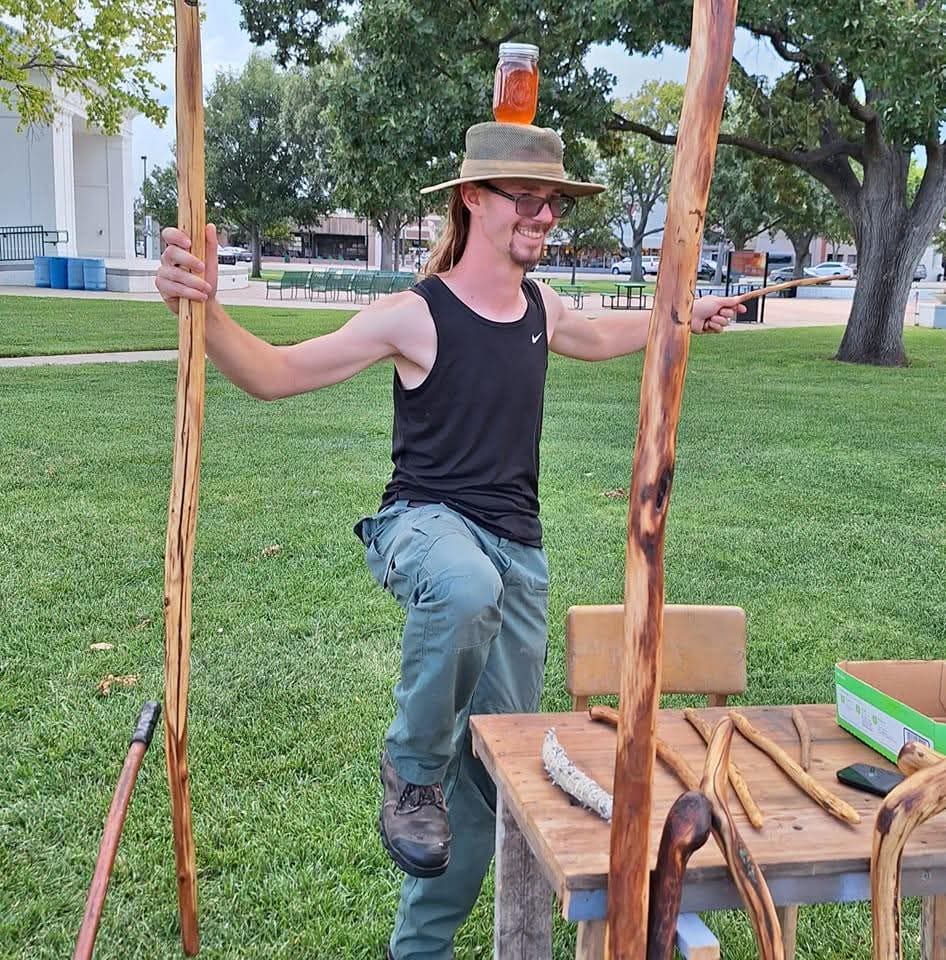
Ritual tools, made one at a time, out of wood I cut myself in Kansas and stone I set by hand. Wands. Staves and walking canes. Pendants. Every piece started as a specific tree on a specific day, and I can tell you which one.
From the root up
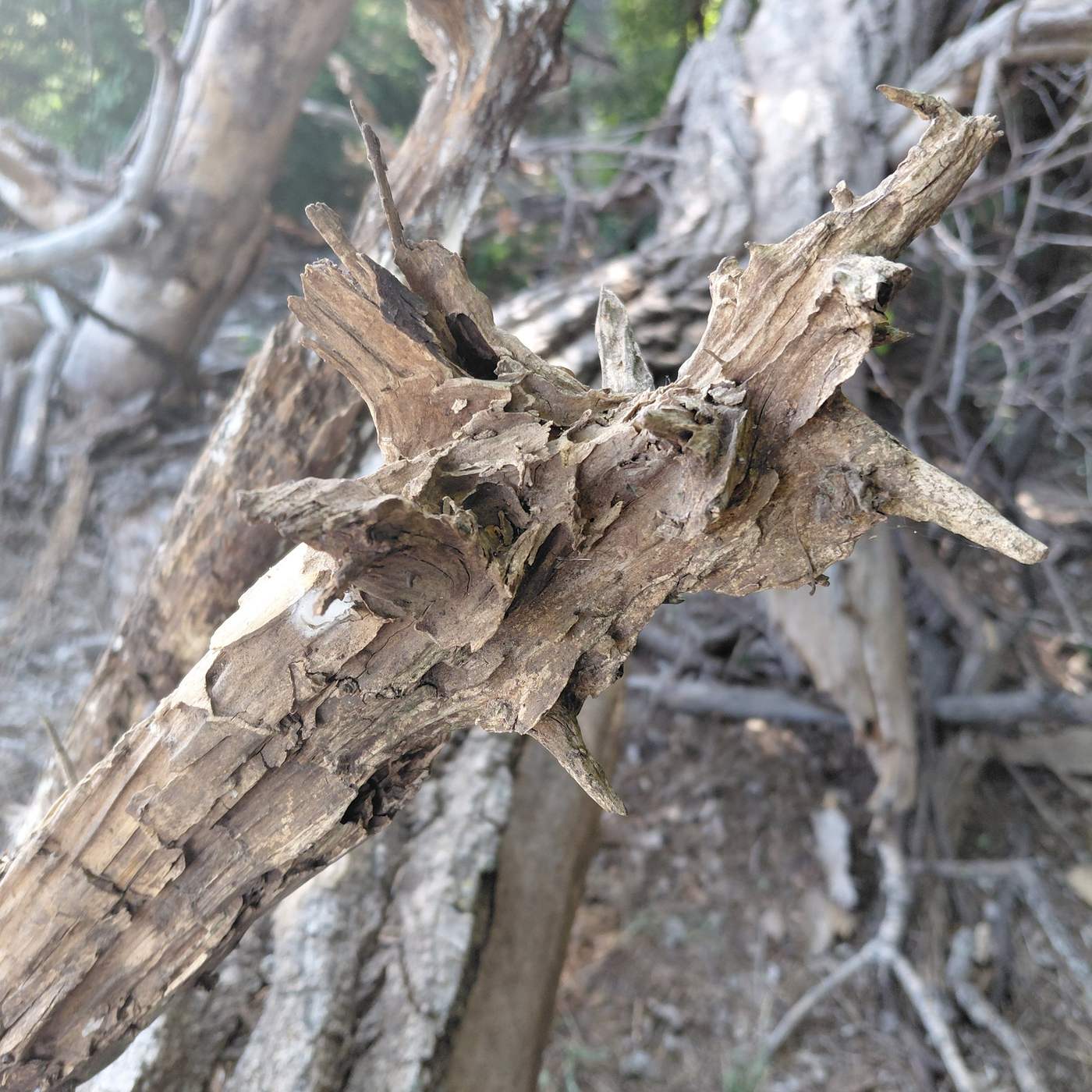
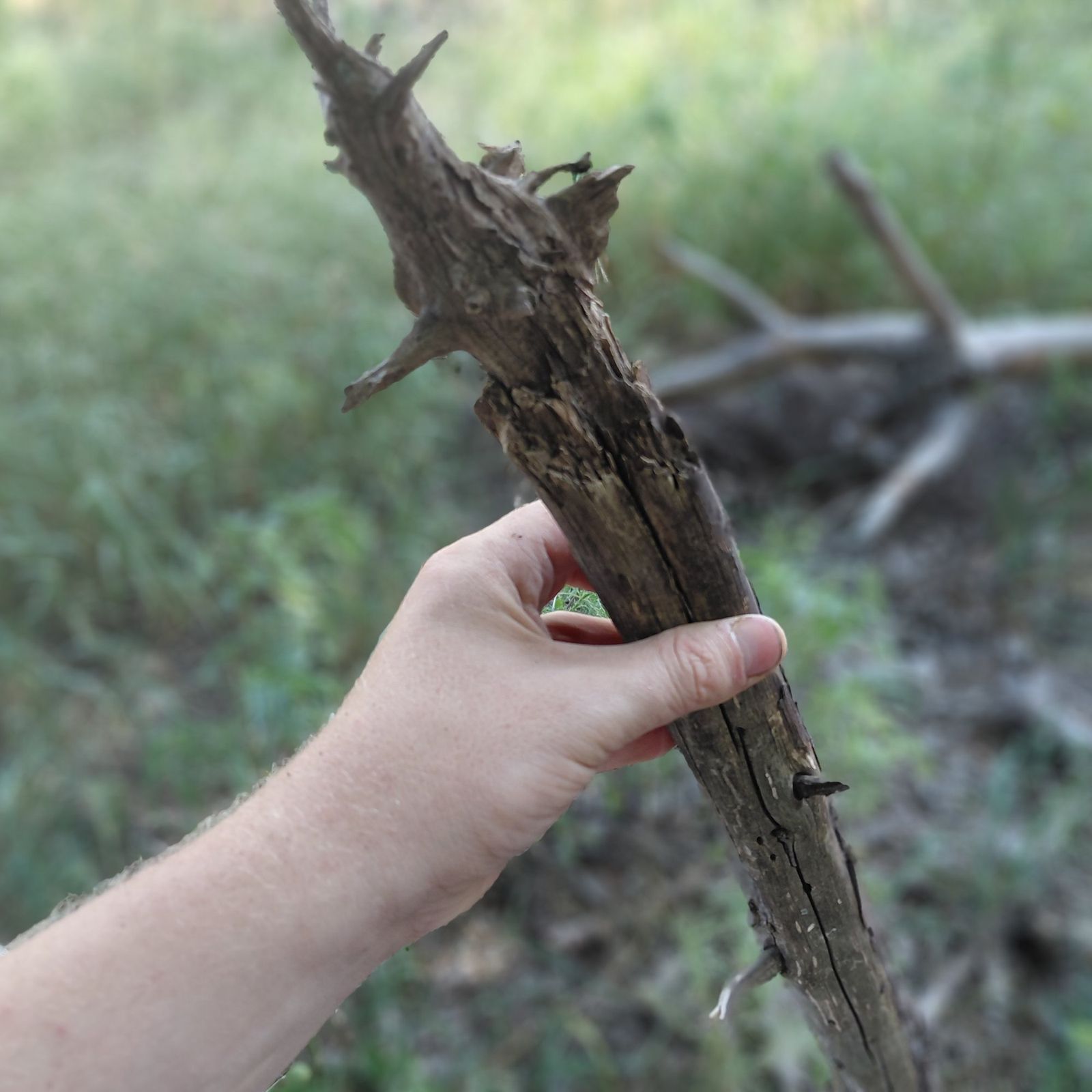
Most of what I make starts out in a tree row. A root ball out of a hedgerow or a creek bank, dry and weathered, that nobody else wanted. It gets cut, cured, cleaned and shaped, and what was under the dirt becomes the head of the staff. Nothing is added that was not already there, except the stone and the finish. The wood came from somewhere specific and it behaves the way that species behaves whether or not I have a theory about it.
The woods
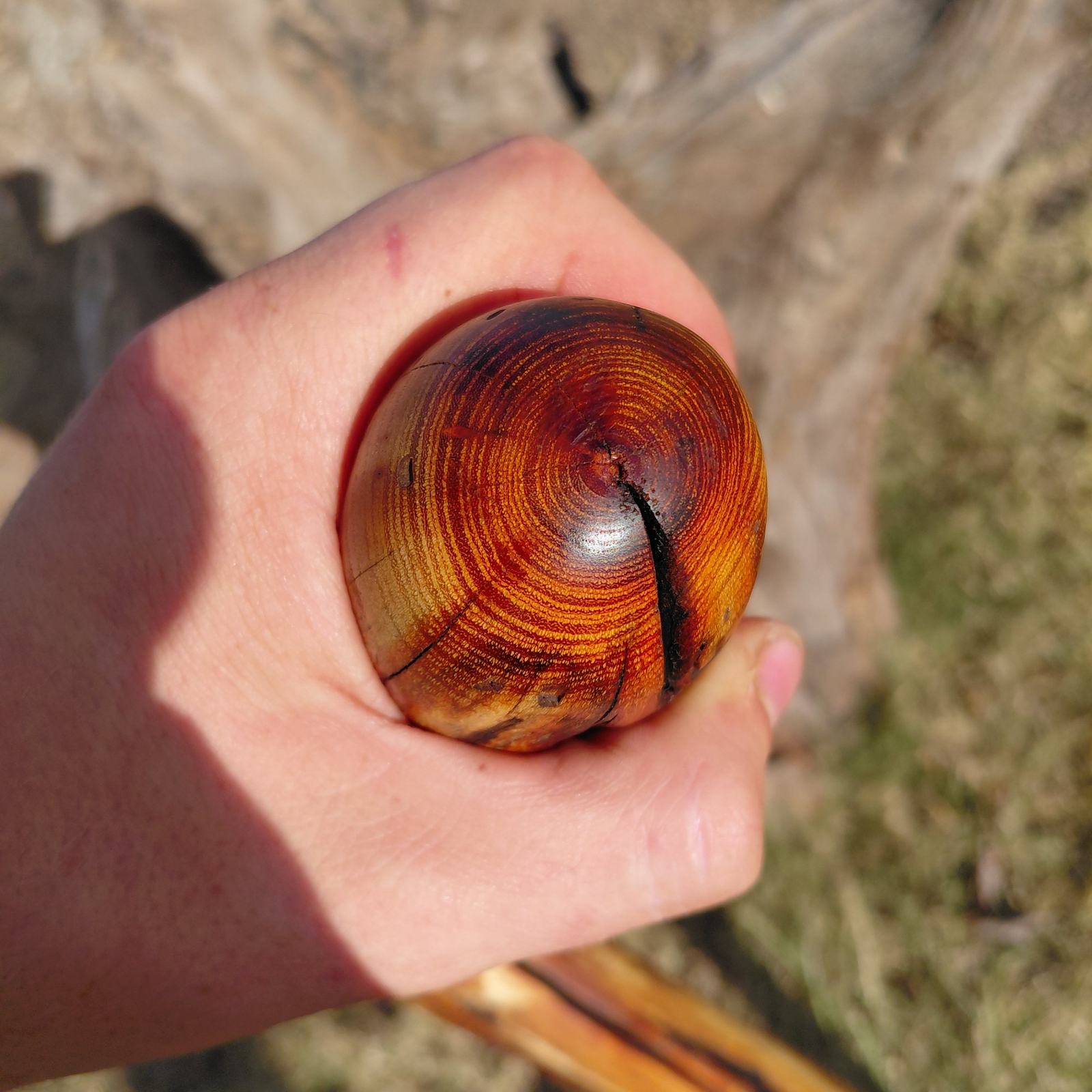
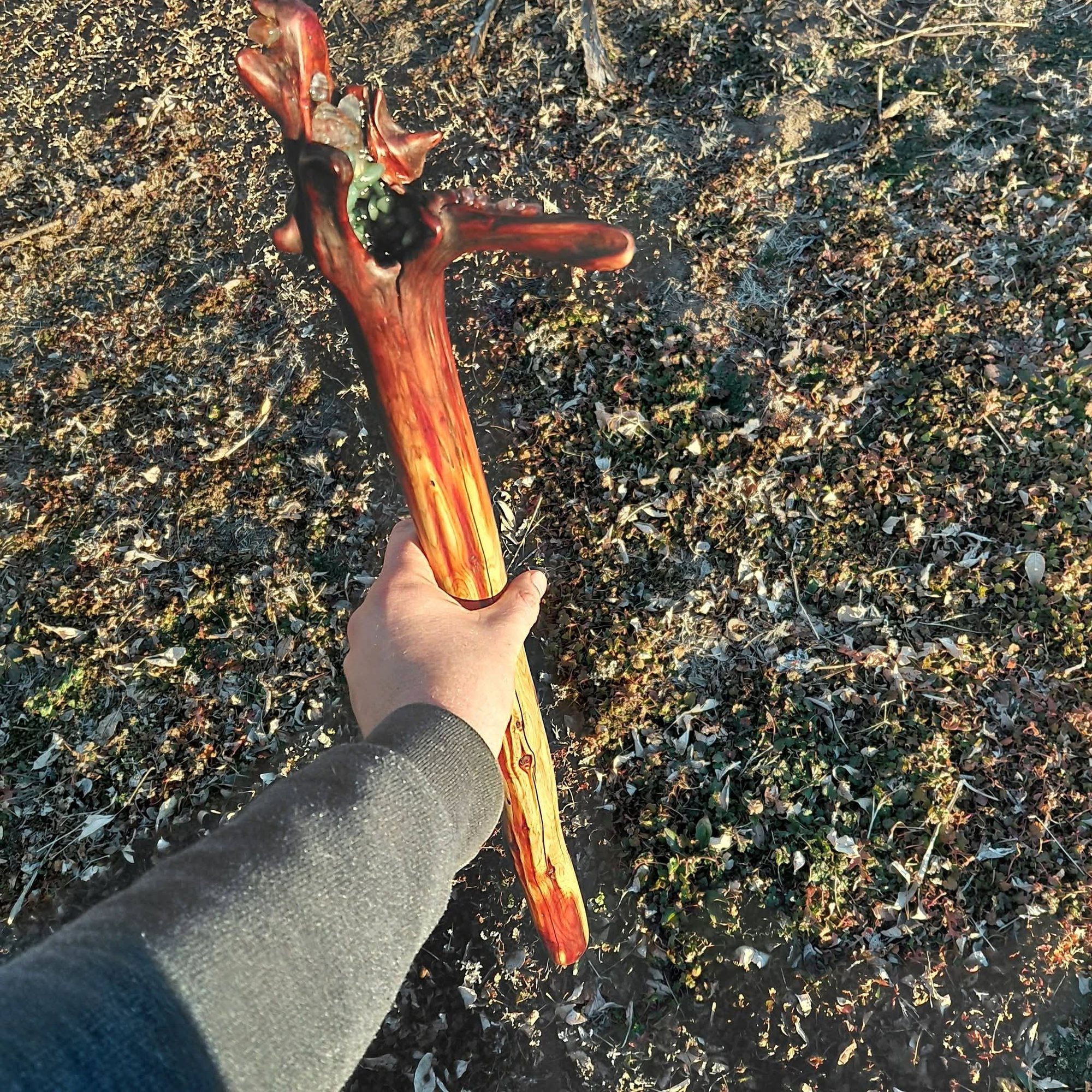
Eastern red cedar. The red heart and the pale sapwood in one piece, and the smell when you cut it. Most of the staves and canes on this page are cedar root.
Osage orange. The bow wood of the plains. It will dull a plane iron in an afternoon, and its yellow goes brown under sunlight. Those are physical facts, and they are also the correspondence.
Black walnut. Dark, dense, and quiet. Handles and pendants.
Wild plum, black locust, apple, mulberry and Siberian elm turn up when a tree comes down near me. I do not buy lumber. I cut what falls or what has to come out, and I season it myself.
The stone
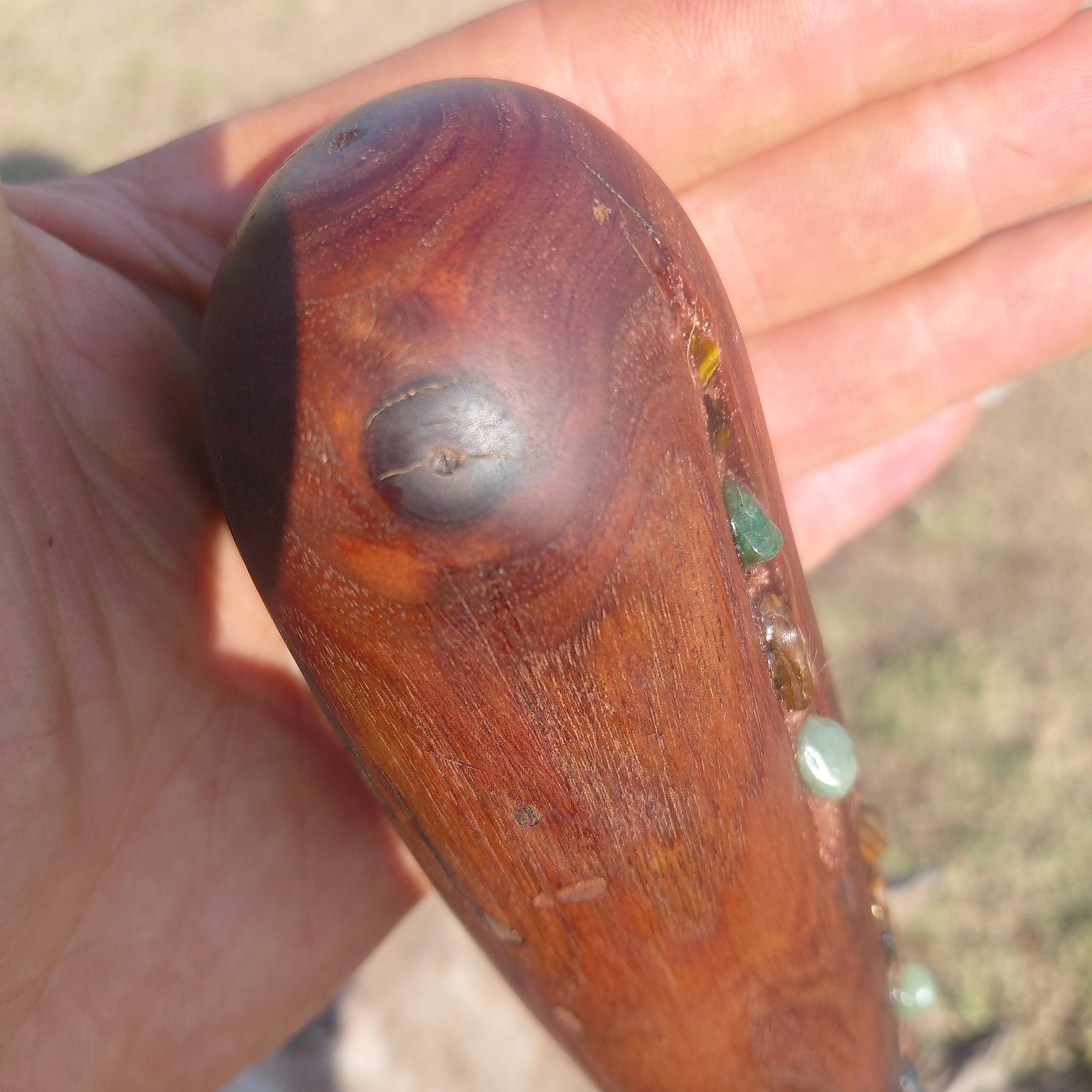
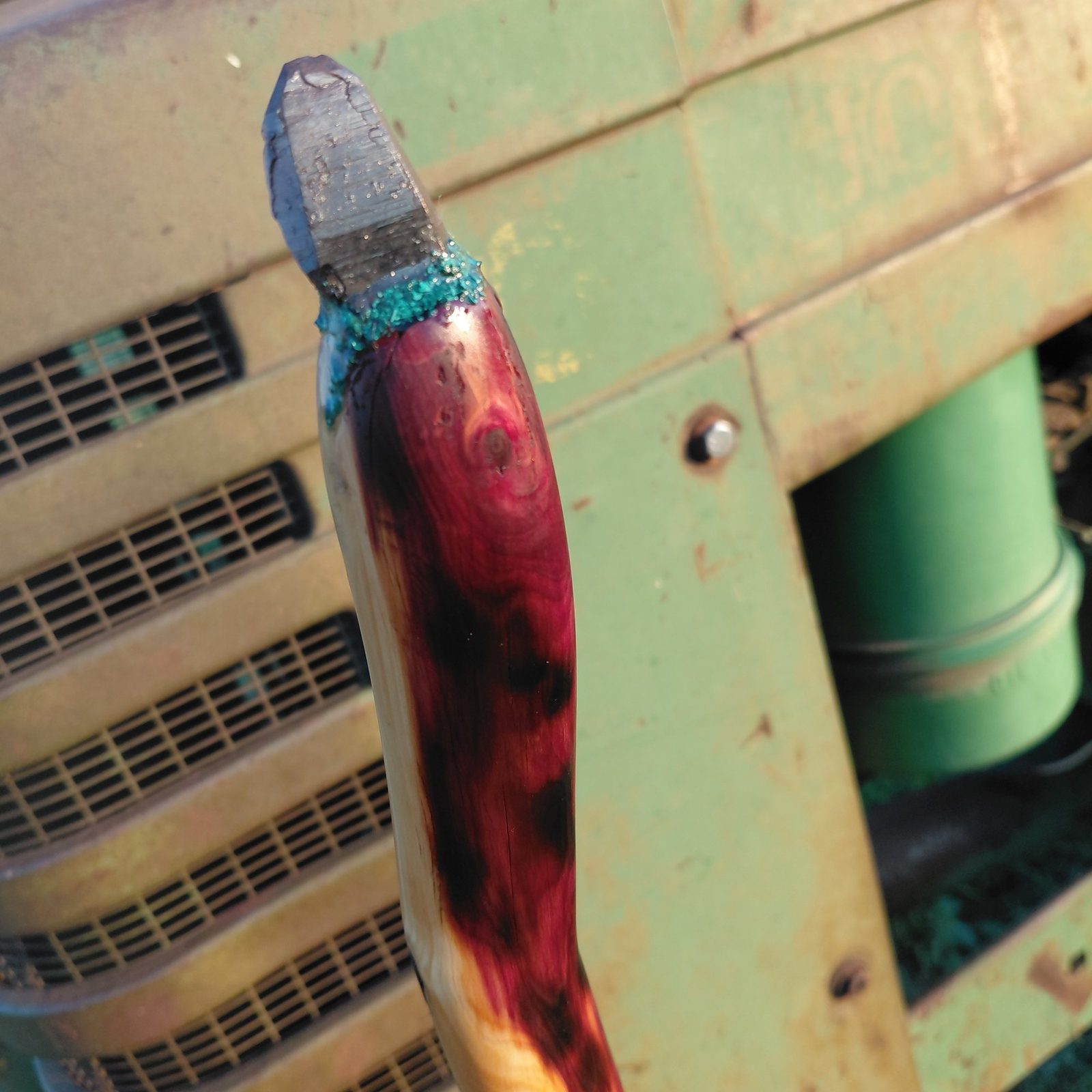
The stone is set into the wood, not glued on top of it. Quartz points, garnet, green aventurine, tiger eye, labradorite, lapis lazuli, carnelian, malachite, bloodstone. Each stone in a piece is named in its listing, with what it was chosen for.
This is where the trades meet. The setting work is jewelrycrafting, done on wood instead of metal, and it is the part I am building the forge and the lapidary bench toward. A tool that argues in one material can only say one thing.
How to read a tool, what a correspondence is, and how to choose or make one of your own is in A Primer on Magickal Tools, free in full.
What I make
- Wands. Cedar, osage, plum, apple, elm. Set with a point or a stone, or left plain.
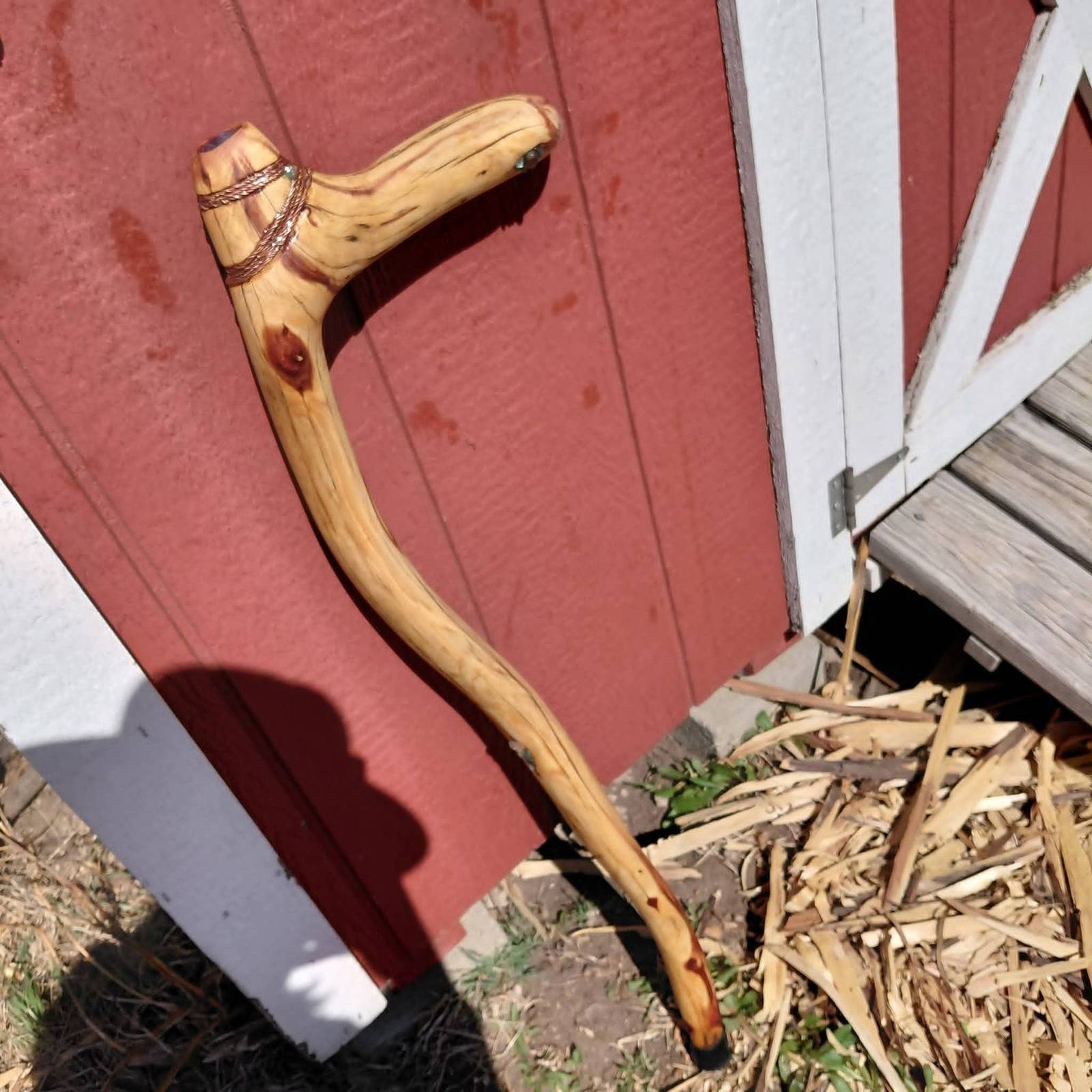
- Staves and walking canes. Root-headed cedar and osage. Made to be leaned on. Copper or black ferrules on the ground end.
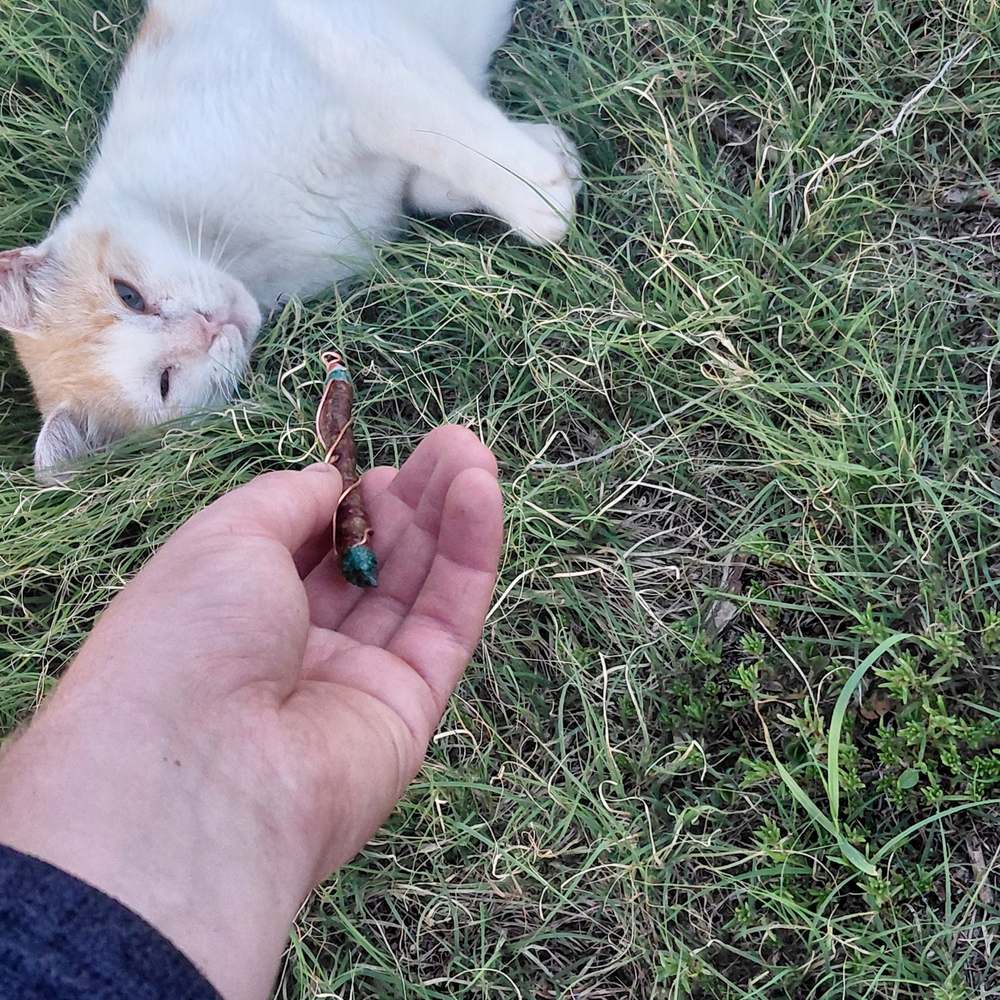
- Pendants. Wand pendants wrapped in copper, bark pendants with stone set in, end grain slices on a cord.
- Repair and custom work. Message me first on Etsy. If something of mine breaks, send it back and I will fix it.
- Coming. Steel from the forge. Lamps. Framed supersigils. Resin and orgonite mixed media. Wood sculpture for its own sake. Listed on the status page before they exist, so you can hold me to it.
Four trades at one bench
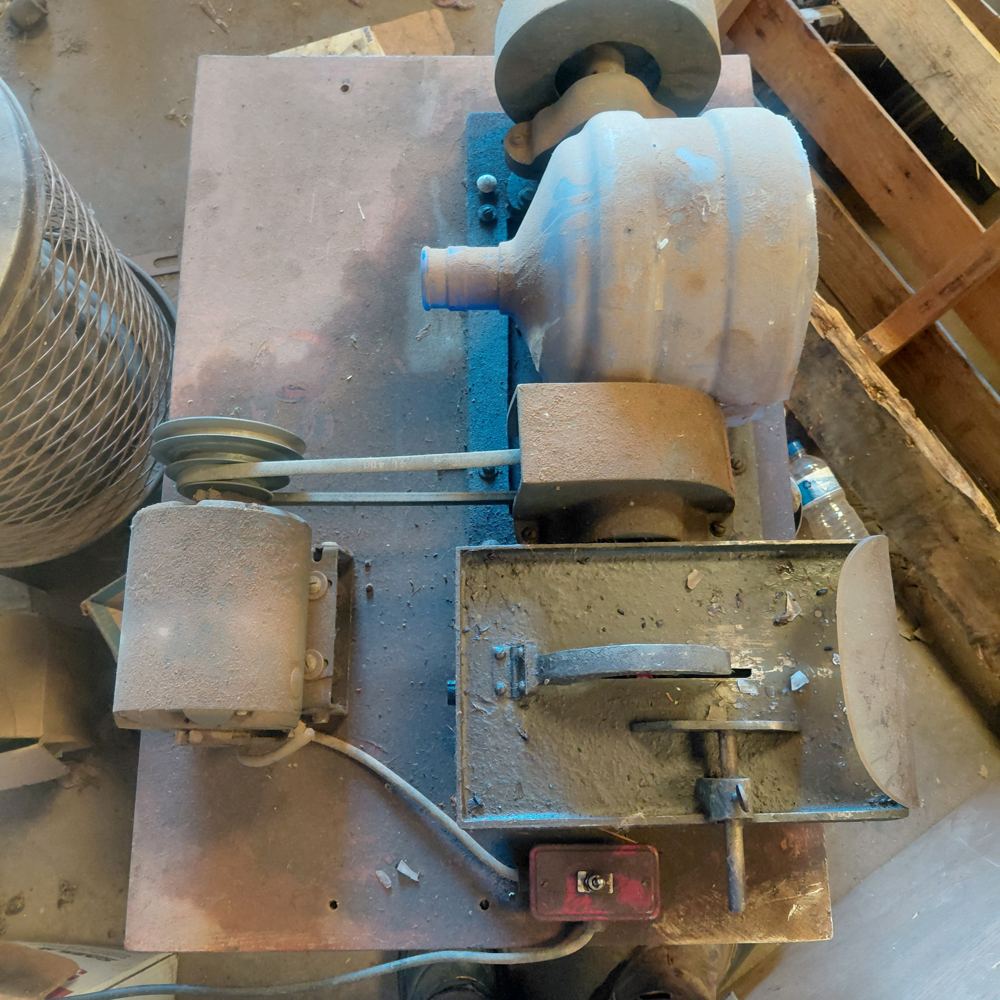
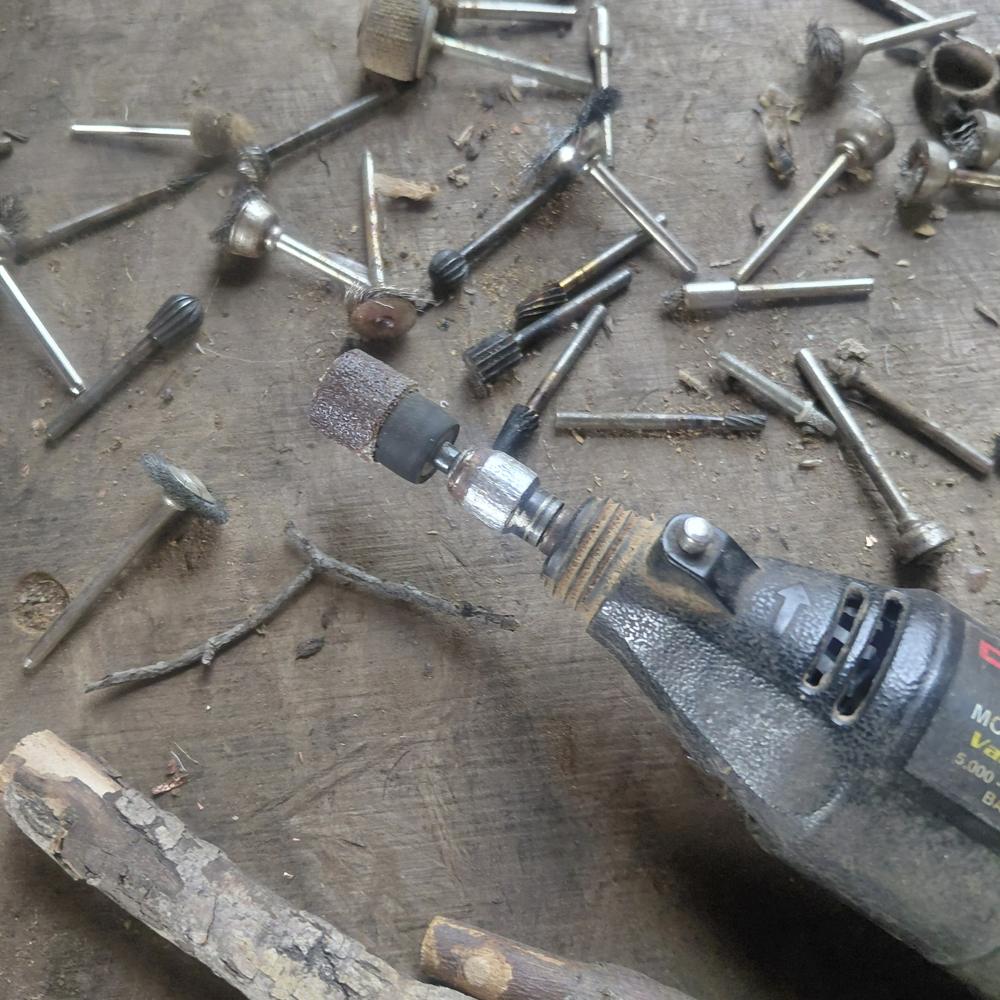
Woodworking is the trade the shop is built on and it runs at speed. Forge work I have done more of than lapidary, but I cannot do it without a forge of my own, and that forge is going to be a hole in the ground I have not dug yet. I would rather tell you that than let you picture a fire I have not lit. Jewelrycrafting is the trade where the other three have to meet, so it moves as they move. Lapidary is the newest of the four and I have barely cut a stone. I will not oversell it. The piece this bench is for is one object that needed all four, and it does not exist yet. The lapidary machine came to me missing parts; the guard on it is recycled plastic I cut myself, and the proper parts will be 3D printed when I can pay someone to do it. It is also far too dry here right now to light a forge even if the hole were dug.
The honest version of where each trade stands, with bars, is on the status page.
Why the hand is coming back
Every time copies get cheap, the hand comes back.
One generation into the factory, William Morris and the Arts and Crafts movement were teaching England to want a chair somebody had made. Two generations into television and plastic, the studio-craft revival of the 1970s founded the blacksmithing associations that still run the classes today; the Artist-Blacksmith’s Association of North America dates to 1973. And now, with words, pictures, and sound all free to produce, knitting, crochet, and hand sewing are back among people who have never been without a screen. Harvard’s ceramics program told public radio in December 2024 that it could serve about three hundred and fifty students and had four hundred and ninety-five on the waiting list. A Brooklyn glass studio says people turn up for classes because they stumbled onto a glassblowing competition on Netflix at midnight. The retail chain that sold the supplies, Joann, closed all of its roughly eight hundred stores in 2025, and the craft did not die with it. It moved to the yarn shop, the community studio, the video, the friend who teaches you. That is not a shopping trend. It is people.
Hand sewing. Knitting. Blacksmithing. Jewelrysmithing. Pottery. Glassblowing. Bookbinding. Leather. Letterpress. Fermenting. Beekeeping. The list does not end, because the list of things a body can do to matter is not finite, and every flood of copies makes the whole list worth more.
Here is why. A copy carries no verification. A pot holds water or it does not. A weld holds or it does not. A blade takes an edge or it does not. Reality does the checking, and the work that survives a flood of copies is the work where the world itself is the judge. And the specific becomes the thing. Every piece on this page started as a specific tree on a specific day, and I can tell you which one. No amount of intelligence produces that sentence. Only a person in a place with a saw does.
This is not nostalgia. The knitter learned from a video. The potter posts the kiln opening. The blacksmith’s forge is on the network before the steel is cold. The hand trades come back every time carrying the new medium in their other hand. Not the network against the hand. The network and the hand, with the hand holding the final say, because the hand is where the checking happens.
Sources for the figures: GBH, 6 December 2024 (Harvard ceramics); UrbanGlass press page (the Netflix effect, anecdotal); Fox Business, February 2025 (Joann); abana.org (1973).
How to buy
Everything for sale is on Etsy, at OscarsMagickalSticks. Each listing carries the wood, the stone, the size, and where the piece came from. Exchanges within seven days. Custom work and repairs start with a message. The books are there too, as choose-to-pay editions of what you can read free on this site.
Once I am in Portland, the tools will also be in a few shops there. That is not true yet, so it is not linked yet.
Quality control
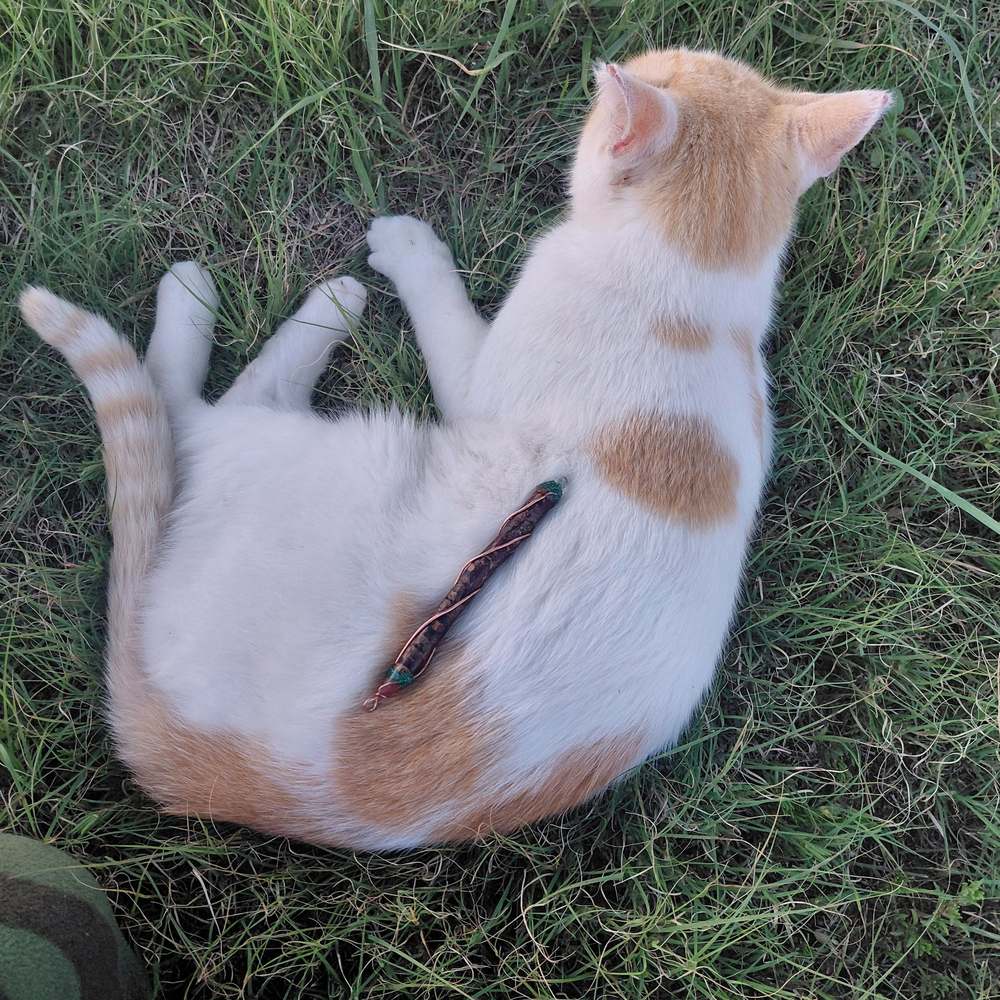
Every piece gets inspected before it ships. The inspector is not always impressed.
Where else the work lives
Etsy · Substack · Discord · Bluesky · Pixelfed · Facebook · TikTok · YouTube · Linktree
AI Attribution Note. Produced with AI assistance (Claude, Anthropic). Direct input: the photographs, the woods, the stones, the trades and their state, the shop terms and the publishing model are mine. Directed: I asked for a page about the things I make that leads to the shop. AI-generated: the arrangement, the captions and the connective wording, drawn from the About and Status pages and the shop listings. The section Why the hand is coming back is Sticks/Philip’s argument; the historical anchors and the 2024 and 2025 figures were researched by Claude and are sourced above. No percentage split is given for this page. It was assembled from material that existed before this site began carrying attribution notes on 26 August 2026, and an accurate split cannot be reconstructed after the fact.